Showing posts with label Amazon Grocery. Show all posts

Thursday, June 5, 2025

Consumers Eat Everywhere: Why Amazon’s Siloed Grocery Strategy Misses the Meal-Time Moment No Silos in the Shopper’s Mind


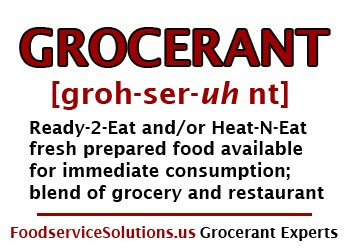
In the world of food, one thing is certain: consumers have no silos. When it comes to meals, they don’t think in terms of traditional grocery formats according to the Grocerant Guru® at Foodservice Solutions®. They want fresh food fast at a good price — wherever they are, whenever hunger strikes. The modern consumer’s meal journey is fragmented by design, not default. From gas stations to street corners, consumers seamlessly integrate eating into their everyday routines — and they’re not waiting on a weekly grocery trip to do it.

Seven Dramatic Examples of Seamless Eating

1.       IKEA’s Swedish Meatballs – Shoppers don’t just browse for furniture; they plan lunch. IKEA’s restaurants generate billions globally, often turning a home furnishing trip into a sit-down meal experience.

2.       Wawa’s Hoagie Culture – What began as a convenience store evolved into a foodservice leader. Today, Wawa is known more for handcrafted sandwiches and fresh coffee than fuel, proving gas stations can be gourmet.

3.       Costco’s $1.50 Hot Dog Combo – Arguably the best food deal in America, this iconic offering drives foot traffic and demonstrates that prepared food can coexist with bulk groceries.


Build a Larger Share of Stomach


4.       Starbucks Drive-Thru Breakfast – With grab-and-go breakfast sandwiches, protein boxes, and lunch items, Starbucks has moved far beyond coffee — and into the weekday meal routine.

5.       Trader Joe’s Grab-and-Go Coolers – From sushi to pre-packed salads, TJ’s leads in impulse meal solutions that don’t require a cart, list, or long checkout line.

6.       Street Vendors in Urban Centers – In NYC, LA, and Chicago, food trucks and carts meet consumers exactly where they are with warm meals ready in minutes — no app, no plan.

7.       Walgreens and CVS Meal Kits – Drugstores now stock sandwiches, wraps, and even heat-and-eat meals, understanding the consumer’s “right now” hunger pangs better than many traditional grocers.


Amazon’s Fragmented Grocery Play

Amazon, by contrast, has taken a more banner-heavy, siloed approach. Despite innovation and deep pockets, it has failed to create a cohesive meal-time identity across its grocery ecosystem. Consumers are faced with a menu of separate brands rather than a unified food experience:

·       Amazon Fresh: A hybrid grocery concept with evolving layouts and local foodservice selections.

·       Whole Foods Market: Premium organic fare, mostly aspirational, not everyday.

·       Amazon Go: A tech-first format that hasn’t scaled.

·       Amazon Grocery: A pilot model trying to compete with mini-marts.

·       Online Platforms: A fragmented mix of third-party and private labels.

While each banner may have strengths, Amazon has built grocery silos — each pulling in different directions — instead of constructing a singular, omnichannel food identity that meets today’s "anytime, anywhere" eating patterns.


Where Amazon Is Missing the Mark

1.       No Singular Meal-Time Voice
Consumers don’t want to decode which banner offers what. They want a reliable, frictionless meal solution, and Amazon has yet to present a unified brand that says: “We’ve got your next meal — fresh, fast, and affordable.”

2.       Siloed Branding Confuses, It Doesn’t Convert
While Amazon touts 90% satisfaction with its new Fresh layouts and brags about Whole Foods’ profitability, there’s no shared customer journey across these formats. There’s no instinctive association between Amazon and “great food right now.”

3.       Innovation Without Integration Is Just Noise
The company is undeniably experimenting — from Amazon Saver to grocery delivery subscriptions — but each initiative lives within its own mini-ecosystem. What’s missing? Holistic execution. A street-vendor-style lunch should be as easy to get via Amazon as a paper towel restock — and it’s not.


What Consumers Actually Want

As the Grocerant Guru® has studied for decades, food success today is built around the consumer’s evolving need set — not banner strategy or store count. That need set includes:

·       Fresh Food – Not just shelf life, but meal relevance: hot, wholesome, and craveable.

·       Fast Access – From curbside to counter to couch delivery, consumers expect immediacy.

·       Good Price – Affordability isn’t just a concern; it’s a requirement in a value-driven market.

And perhaps most importantly: it has to fit into their lives — not the other way around.


Lessons from the Past: Supermarket to Super Meals

Grocery retail has transformed from pantry-filling to meal-solving. The success of retailers like Wawa, Trader Joe’s, and even Costco’s food courts reflect a deeper truth: the line between food retail and foodservice is not just blurry — it’s irrelevant.

Shoppers no longer shop aisles — they shop occasions, emotions, and convenience. That’s why a cold brew and sandwich at Starbucks feels more relevant at noon than a trip to a 50,000-square-foot Amazon Fresh.

Final Thought: Amazon’s Grocerant Opportunity

Amazon still has the tools, tech, and talent to revolutionize food retail. But unless it unites its banners into a cohesive grocerant strategy — one that addresses meals, not shelves — it will continue to grow grocery in volume, not in value.

The future belongs to the brands that understand eating is an anytime act. If Amazon wants to truly dominate grocery, it must stop building banners and start building a food-first identity that fits inside a consumer’s day — not just their cart.

Steven Johnson is the Grocerant Guru® at Tacoma, WA based Foodservice Solutions® has been tracking the convergence of restaurants, retailers, and food-forward CPGs for over 35 years. His insights focus on consumer behavior, grocerant strategies, and meal migration trends shaping the future of food.


Tuesday, March 12, 2024

Amazon’s Missteps with Whole Foods Market Again?


While the acquisition of Whole Foods by Amazon in 2017 brought potential benefits, there have also been criticisms of Amazon's approach, including our own Steven Johnson Grocerant Guru® at Tacoma, WA based Foodservice Solutions. Here are 8 points often mentioned:

1.       Branding: Buying Whole Food aka ‘Whole Paycheck’ Amazon missed an opportunity to reposition Whole Foods too Amazon’s core strength competitive pricing. Initial attempts to lower prices across the board reportedly alienated Whole Foods' core customer base, accustomed to higher-priced, specialty items. Come on that was a sign that legacy employees were not buying to Amazon’s way.  Why? Messaging.

2.       Data Over-Load: They had so much data that was counter to consumer driven food path to purchase they then opened Amazon Go, Amazon Fresh, now Whole Foods Express. Amazon does not have a balance of ‘Intellectual Quotient vs Emotional Quotient’.  The fact is consumers eat with their eyes.   

3.       Loss of "Whole Foods Experience": Critics argue that Amazon's focus on efficiency and cost-cutting impacted the in-store experience. Some claim the unique atmosphere and customer service aspects that differentiated Whole Foods were diluted.


4.       Employee Morale: Integrating Whole Foods' company culture with Amazon's, known for its demanding work environment, reportedly led to employee dissatisfaction and high turnover at Whole Foods.

5.       Missed Opportunities in Online Grocery: While Amazon is a leader in online retail, some argue they haven't fully capitalized on integrating Whole Foods into their online grocery platform.

6.       Amazon-centric Branding: Replacing Whole Foods signage with prominent Amazon branding in some stores is said to have alienated customers who felt the unique identity of Whole Foods was being lost. Think about it. Does Amazon want to get stuck in the middle like Kroger and have 19 plus banners selling food. It’s nonsense.

7.       Private Label Pushback: Amazon's introduction of their private label products in Whole Foods faced resistance from some customers who felt it clashed with the store's focus on established, often local, brands.  Simple messaging problem. Why?

8.       Cannibalization of Whole Foods Market Share: Concerns exist that by offering Whole Foods products through Amazon Prime, they might be taking away sales from physical Whole Foods stores, impacting their long-term viability.  It’s a branding, pricing, issue, positioning issue and yes, another misstep.


It's important to note that these are just some of the criticisms leveled against Amazon's approach to Whole Foods by Johnson, and the situation is complex with various perspectives. It’s time to stop arguing that Amazon is still integrating the companies and that long-term success is possible.

So, this new Whole Foods Market that they have introduced, “quick-shop” small-format store designed to provide customers in urban neighborhoods a fast, convenient shopping experience. Ranging between 7,000 and 14,000 square feet, the size of many traditional convenience stores, the locations are about a quarter to half the footprint of an average 40,000-square-foot Whole Foods grocery store, paving the way for expansion in dense, metropolitan areas.

Another new formant is not the answer for Amazon’s Whole Foods.  Success does leave clues, it’s time Amazon stop the missteps allow Whole Foods, Amazon Go, Amazon Fresh to focus on the consumer drive for fresh food fast with grocerant niche meals and meal components playing a larger role not smaller.

Success does leave clues. One clue that time and time again continues to resurface is “the consumer is dynamic not static”.  Regular readers of this blog know that is the common refrain of Steven Johnson, Grocerant Guru® at Tacoma, WA based Foodservice Solutions®.  Our Grocerant Guru® can help your company edify your brand with relevance.  Call 253-759-7869 for more information. 


Want a Larger Share of Wallet?

Think about 

Larger Share of Stomach


Tuesday, November 30, 2021

Amazon Grocery adds Customer Focused Recyclable Packaging


Hot food hot, cold food cold that is the old adage that has been a mainstay within the foodservice sector for over a hundred years, and maybe longer.  It is great to see how one company elevates that standard with customer focused relevance today.

That company is Amazon.  It is taking a major step in making all of that pickup and delivery better for the planet and better for the customer as they edify their food delivery standards according to Steven Johnson, Grocerant Guru® at Tacoma, WA based Foodservice Solutions®.

Amazon Grocery is launching new curbside recyclable packaging that keeps grocery items chilled and frozen during delivery. The program rolled out just in time for Thanksgiving when customers were ordering turkey, green beans, or frosty pints of ice cream, chilled and frozen foods from Amazon Fresh and Whole Foods Market will arrive insulated in packaging made from recycled paper, permanently eliminating the need for plastic liners and bubble bag insulation. The new packaging is also easier for customers to recycle at home.


So, according to the company, moving to all curbside-recyclable insulation packaging reduces material waste, and each year replaces approximately 735,000 pounds of plastic film, 3.15 million pounds of natural cotton fiber, and 15 million pounds of non-recyclable mixed plastic. This new packaging is the latest step in Amazon’s commitment to The Climate Pledge, a bold commitment to be net-zero carbon across its business by 2040, and to building a more sustainable business.

Stephenie Landry, Vice President, Amazon Grocery, detailed the company's latest journey to recyclable packaging journey in a new blog post:

How would you describe the problem we were trying to solve for customers?

We have long wanted to find a more sustainable solution for the plastic liners and bubble bags that are often used to insulate chilled and frozen items. The criteria for any new packaging solution came down to five key considerations. First, and probably the most obvious, we wanted to ensure the packaging- maintained product chill chain and Amazon’s high bar for food safety.


Second, the packaging needed to be small, compact, and flexible for our delivery drivers. Think of it as fitting multiple grocery bags into the trunk of a Prius, so switching to stiff cardboard boxes for insulation wouldn’t work. Although they’d maintain food-safe temperatures, boxes would take up more room, which would mean fewer grocery deliveries per vehicle, ultimately resulting in more vehicles—and carbon emissions.

The third major consideration was that any new packaging needed to be easily recyclable—as in, customers could leave it with the rest of their curbside recyclable material. Fourth, it also needed to be inexpensive and scalable because we wanted to continue to ensure that Amazon’s grocery delivery offerings were widely accessible for customers.


And finally, we wanted to generate less overall packaging for customers. We are continually inventing new packaging solutions, and sometimes the simplest action is to use less of it, especially when Mother Nature provides her own “chill chain” in colder months.

In October, Amazon forecast modest sales growth for the fourth quarter. The bleak holiday season outlook came as Amazon reported sales for its third quarter increased 15% to $110.8 billion, within the company’s forecast range of $106 billion to $112 billion shared at the end of the second quarter. That’s impressive growth, but profits were a different story: Net income fell to $3.2 billion and earnings per share fell to $6.12 from net income during the prior-year third quarter of $6.3 billion and earnings per share of $12.37.

Expenses rose in key areas, which CEO Andy Jassy positioned as the company doing right by customers rather than maximizing near-term profits. For example, fulfillment expenses increased 27.8% to $18.5 billion, technology and content expenses increased 31% to $14.4 billion, and marketing expenses increased 47.4% to $8 billion. Customers appreciated Amazon’s commitment, which is part of what drove the 39% growth in AWS revenue, according to Jassy.

“It’s also driven extraordinary investments across our businesses to satisfy customer needs. Just one example is that we’ve nearly doubled the size of our fulfillment network since the pandemic began,” Jassy said. “In the fourth quarter, we expect to incur several billion dollars of additional costs in our consumer business as we manage through labor supply shortages, increased wage costs, global supply chain issues, and increased freight and shipping costs, all while doing whatever it takes to minimize the impact on customers and selling partners this holiday season.

Success does leave clues. One clue that time and time again continues to resurface is “the consumer is dynamic not static”.  Regular readers of this blog know that is the common refrain of Steven Johnson, Grocerant Guru® at Tacoma, WA based Foodservice Solutions®.  Our Grocerant Guru® can help your company edify your brand with relevance.  Call 253-759-7869 for more information.