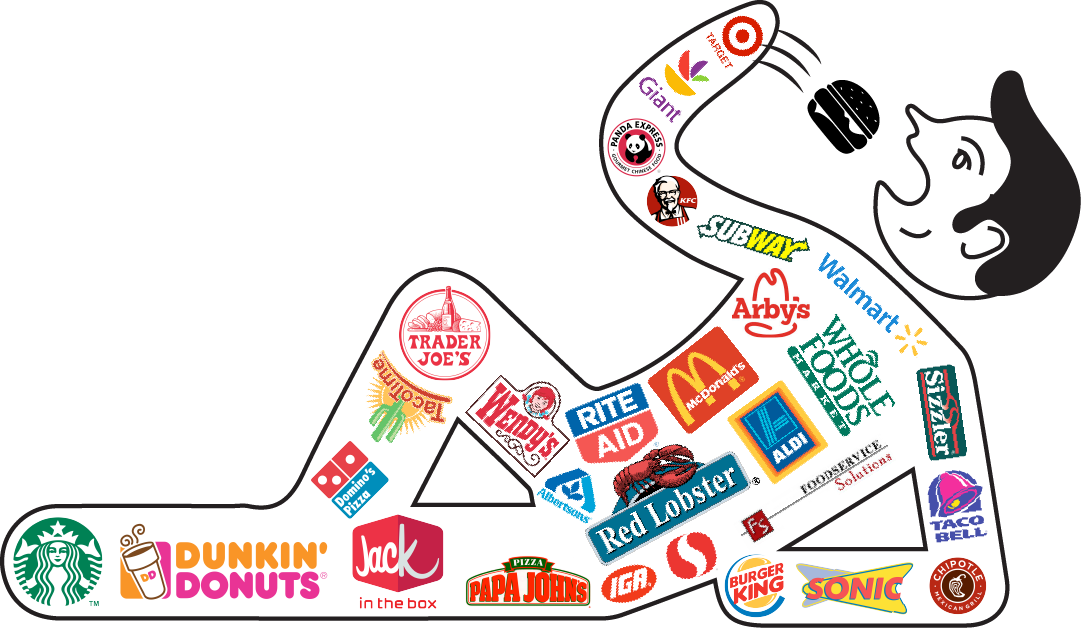
In the food service industry, multi-concept restaurant
companies emerged as powerhouses, driven by the logic that consolidating a
variety of restaurant brands would create synergies, economies of scale, and a
broader customer reach.
Now think about it, the idea seemed sound: by acquiring or
developing multiple restaurant concepts under one roof, these companies could
maximize profits and spread risk across diverse brands. However, as history
shows, the outcome has often been different according to Steven Johnson
Grocerant Guru® at Tacoma, WA based Foodservice Solutions®. The challenges of integrating various brands,
aligning operational efficiencies, and maintaining brand identities have proven
daunting, with many once-promising brands fading away or failing altogether.
Let’s examine four major multi-concept restaurant companies, their strategies,
and why so many of their brand’s struggle to survive.

1. Darden Restaurants: A Legacy of Hit
and Miss Acquisitions
Darden Restaurants,
best known for flagship brands like Olive Garden and LongHorn Steakhouse, is
one of the most prominent multi-concept restaurant companies in the United
States. Darden’s early success stemmed from a focused approach: Olive Garden
and Red Lobster were staples in the casual dining space, attracting
middle-class families with a promise of affordability and consistency. However,
as Darden acquired and developed new brands—such as Seasons 52, Bahama Breeze,
and Eddie V’s—the company faced challenges in managing them all effectively.
The acquisition of Red Lobster in 1970 marked a key era for
Darden, but by 2014, shifting consumer trends made seafood an expensive and
less profitable focus. Darden sold Red Lobster to Golden Gate Capital, a move
underscoring a significant trend in multi-concept companies: brands that no
longer align with consumer tastes are often jettisoned, sometimes stripping
away decades of brand equity. Meanwhile, Bahama Breeze and Seasons 52, while
interesting concepts, struggled to resonate broadly due to competition from
specialized casual dining and the growing fast-casual sector. Darden’s
experience suggests that as multi-concept companies expand, they must contend
with the realities of changing dining preferences, leading to brand stagnation
or divestment.

2. Yum! Brands: Innovation Meets Brand
Saturation
Yum!
Brands, another behemoth, manages KFC, Pizza Hut, Taco Bell, and more
recently, Habit Burger Grill. Yum!’s aggressive expansion strategy,
particularly with KFC and Pizza Hut, has solidified its international reach,
but that reach hasn’t guaranteed balanced success across all brands. The
company’s high-profile acquisitions and brand extensions have often led to
struggles in brand consistency and adaptability to local markets. In the 2000s,
for instance, Pizza Hut and KFC faced significant backlash in the U.S. for failing
to adapt to health-conscious trends and rising consumer interest in fresh
ingredients.
Yum! Brands’ acquisition of Habit Burger Grill in 2020
exemplifies the challenges of diversification. While Habit Burger entered the
portfolio with high hopes, its limited market share and strong competition from
established fast-casual burger chains make growth challenging. Yum! has tried
to balance the marketing strategies across brands, but Habit Burger has
struggled to capture the same consumer loyalty as Taco Bell or KFC, leading to
questions about whether it will face the same fate as Yum!’s failed Long John
Silver's and A&W concepts, which were sold off in 2011.

3. Brinker International: The
Challenge of Dual Brands
Brinker International,
the parent company of Chili’s and Maggiano’s Little Italy, exemplifies a more
conservative approach to multi-concept management. By focusing on only two main
brands, Brinker has mitigated some of the challenges faced by more diversified
companies, yet even this concentrated strategy hasn’t been without challenges.
Chili’s, Brinker’s core brand, has been a reliable player in the casual dining
market, but the brand has faced stagnation as consumer preferences shifted
toward fast-casual and health-focused dining.
Maggiano’s, while profitable in certain markets, has not
expanded as rapidly or as widely as initially hoped, due in part to the
challenges of translating a full-service Italian dining experience across
multiple regions and demographics. Brinker's struggle illustrates a central
issue for multi-concept firms: even with fewer brands, it’s difficult to
achieve synergy between different concepts. Rather than expanding a collection
of complementary brands, Brinker has been forced to heavily invest in rebranding
Chili's to meet modern tastes, while Maggiano's growth has remained limited,
essentially resulting in a lack of portfolio diversity.

4. Landry’s, Inc.: Aggressive
Expansion, Harder Retention
Landry’s Inc.,
led by hospitality magnate Tilman Fertitta, operates over 60 different
restaurant concepts, including recognizable names like Bubba Gump Shrimp Co.,
Morton’s The Steakhouse, and Rainforest Café. Fertitta’s strategy has been a
relentless acquisition spree, scooping up well-known brands from seafood to
steakhouses, entertainment complexes, and even casinos. But this ambitious
strategy has led to issues in brand cohesion, and the diverse portfolio has
created significant logistical challenges.
While the initial acquisition boosts have been beneficial,
many Landry’s brands have struggled with identity and relevance, particularly
as new dining trends prioritize unique, specialized experiences over
corporate-owned chains. The Rainforest Café, for instance, a family dining
staple in the 1990s and early 2000s, has become an outdated concept in a market
now dominated by experiential, local restaurants. Similarly, Bubba Gump Shrimp
Co., once novel, now competes with a saturated seafood dining market. Landry’s
extensive portfolio, rather than creating synergies, has created an
overwhelming array of concepts, with many brands failing to capture repeat
clientele in an era where consumers seek innovative and health-oriented
choices. The result is an expansive empire but with many brands facing
obsolescence and diminishing relevance.

Why Acquired Brands Struggle to
Survive
The decline of many brands according to the Grocerant Guru®, within
multi-concept companies can be attributed to several overarching issues:
1.
Consumer Trends and
Changing Preferences: Restaurant brands that can’t quickly
adapt to new consumer preferences—whether for healthier options, local
sourcing, or unique dining experiences—risk obsolescence. Many multi-concept
companies are simply too large and complex to pivot quickly, resulting in
declining brand relevance.
2.
Identity Dilution: When companies house multiple brands under one corporate
structure, the individuality that once attracted loyal customers often fades.
The "cookie-cutter" effect can make different brands feel
indistinguishable, especially as multi-concept firms impose standardized
operational practices that strip away unique brand identities.

3.
Operational
Complexity: Managing diverse restaurant concepts
requires distinct marketing strategies, supply chains, and culinary
philosophies. The more concepts a company owns, the harder it becomes to
maintain operational excellence across all brands, often leading to cuts in
quality and service.
4.
High Overhead and
Divestment Needs: As companies expand their
portfolios, the overhead costs increase, and maintaining profitability across
all brands becomes challenging. Companies are frequently forced to divest
underperforming brands to cut losses, leading to faded brand presence or a full
exit from the market.
The Future of Multi-Concept Restaurant
Companies
The history of multi-concept restaurant companies reveals a
central paradox: while diversification seems like a safeguard against market
volatility, it often breeds challenges that diminish brand value over time.
With shifting consumer preferences favoring localized, authentic, and
health-focused options, many multi-concept restaurant companies will likely
need to evolve, focusing on fewer, better-aligned brands that can adapt more
readily to changing market conditions.

Only companies capable of agile brand management and
meaningful, adaptable concepts will likely succeed in the future. For others,
the fate of their brands will follow the well-trodden path of many before them:
a gradual fade into irrelevance.
Don’t over reach. Are
you ready for some fresh ideations? Do your food marketing ideations look more
like yesterday than tomorrow? Interested in learning how Foodservice Solutions® can edify your retail food brand while
creating a platform for consumer convenient meal participation, differentiation
and individualization? Email us
at: Steve@FoodserviceSolutions.us or visit us on our social media sites by clicking the
following links: Facebook, LinkedIn, or Twitter