Showing posts with label Plant Based Food. Show all posts

Tuesday, May 13, 2025

Plant-Based Food Finding New Menu Space


From the hearths of ancient civilizations to the touchscreens of modern meal apps, plant-based foods have woven their way through history with resilience and renewed relevance. Today, the menu evolution toward more plant-based options is more than a passing phase—it's a calculated response to a new era of consumer demands centered around health, sustainability, and food discovery.

A Historical Taste of Plants

Throughout history, civilizations from the Mediterranean to Southeast Asia thrived on predominantly plant-based diets. For the majority of the global population, meat was a rarity; plants were the daily nourishment. With the rise of industrial farming in the 20th century, animal-based foods flooded menus, pushing plant-centric meals to the sidelines. But now, consumer migration is turning the tables.

The Grocerant Guru® Perspective: Plant-Based as the New Meal Component King

In the grocerant niche—where grocery stores, restaurants, and c-stores blur lines to sell Ready-2-Eat and Heat-N-Eat fresh prepared food—plant-based meals are thriving. The Grocerant Guru® sees them not as replacements, but as essential components in meal bundling, flavor discovery, and consumer customization.

Here's why that matters: today’s consumers want food that is fast, fresh, portable, and personalized. Plant-based options check every box. They're easy to package, travel well, and offer health and environmental halos that resonate across generations, from Gen Z to Boomers.


Mix-and-match meals with a plant-based protein, a grain, a bold sauce, and a fresh veggie side are becoming the go-to dinner solution. Restaurants and retailers that build plant-based meal kits or takeout bundles are empowering consumers with choice while increasing check averages.

Benefits on the Plate and Beyond

1. Healthier Choices:
High in fiber, vitamins, and antioxidants, plant-based meals support heart health, weight management, and immune function.

2. Environmental Impact:
Plant-based production uses fewer resources, cuts emissions, and aligns with sustainability goals embraced by both consumers and corporations.

3. Inclusive Menus:
A diverse menu with plant-based options welcomes vegans, vegetarians, and flexitarians while avoiding allergens like dairy and eggs.

4. Superior for Takeout:
These meals often reheat better, hold flavor longer, and maintain appealing textures—key for growing delivery and curbside sectors.

5. Culinary Creativity:
Chefs and product developers are reimagining global classics—from Ethiopian lentil stews to Korean BBQ mushrooms—inviting food exploration.


Top Five Reasons Consumers Buy Plant-Based Foods

According to the Grocerant Guru®, these are the core motivators behind the plant-based surge:

1.       Health & Wellness:
Consumers are seeking foods that promote longevity, weight management, and disease prevention.

2.       Environmental Concerns:
Climate change awareness has consumers choosing meals with lower environmental footprints.

3.       Animal Welfare:
Ethical concerns around factory farming are pushing shoppers toward cruelty-free options.

4.       Food Discovery & Flavor Innovation:
Plant-based meals often incorporate bold, global flavors that introduce consumers to new cuisines.

5.       Digestive Comfort & Allergies:
Many plant-based items are naturally dairy- and gluten-free, making them ideal for sensitive eaters.


Final Serving

From ancient grains to modern meatless tacos, plant-based food is not only finding new menu space, it’s redefining what’s for dinner. For restaurants, convenience stores, and grocers alike, the opportunity is to bundle these meals, market their benefits, and tap into the consumer desire for food that feels good, tastes bold, and travels well.

As the Grocerant Guru® always says, "Consumers are not abandoning meat—they're embracing variety. Plant-based meals aren't just an alternative; they're the answer to 'What's for dinner?' at 4 PM."

Outsourced Business Development—Tailored for You

At Foodservice Solutions®, we identify, quantify, and qualify new retail food segment opportunities—from menu innovation to brand integration strategies.

We help you stay ahead of industry shifts with fresh insights and consumer-driven solutions.

🔗 Connect with us on social media: Facebook, LinkedIn, Twitter

Ready to Find Your Next Success Clue?

We specialize in outsourced food marketing and business development ideations—helping brands seize opportunities in food retail, technology, and menu innovation.

📩 Reach out today: Steve@FoodserviceSolutions.us
🔗 Follow us: Facebook, LinkedIn, Twitter


Saturday, October 12, 2024

Plant-Based Protein's Unfulfilled Promise


The early 2010s witnessed the rise of plant-based proteins, heralded as a "greener," cost-efficient alternative to traditional meat. Brands like Beyond Meat and Impossible Foods captured public imagination and media attention, promising healthier diets, environmental sustainability, and affordable alternatives to animal-based products.

However, according to Steven Johnson Grocerant Guru® at Tacoma, WA based Foodservice Solutions® a decade into this movement, the plant-based industry has struggled to meet these lofty expectations, leading to waning consumer interest and a significant decline in market share.

The Rise and Initial Success

Plant-based proteins burst onto the scene with a bang. The early days saw widespread adoption among health-conscious consumers, environmental advocates, and even curious omnivores. The products found a prime place in grocery stores, from major retailers to specialty health stores. Innovators in the field proclaimed these alternatives were the future of food, signaling a potential reduction in global carbon emissions and less reliance on resource-intensive livestock farming.


But the initial buzz was not built to last. Companies leveraged the excitement to position plant-based proteins as premium products, opting to charge higher prices to create an exclusive market. At the time, the prices were justified by the novelty of the product and the complex production processes involved in mimicking the taste and texture of meat. This strategy allowed companies to quickly capture attention and revenue. Unfortunately, this approach also alienated cost-sensitive consumers, setting the stage for the industry's current struggles.

The Price Problem

While plant-based products thrived in their early stages, their price point began to undermine their mass appeal. Plant-based meats were often priced significantly higher than their traditional counterparts, even as production scaled up. This has been a critical misstep. Consumers expected plant-based options to become cheaper over time, in line with standard market dynamics that reward economies of scale. Yet, the industry resisted lowering prices, maintaining premium positioning as a key selling point.


As inflation and economic pressures mounted in recent years, consumer demand began to shift. People facing tighter budgets became less willing to pay extra for plant-based proteins when conventional meat was cheaper. The numbers tell a sobering story: fresh meat alternatives saw volume sales drop 21% year-over-year, while frozen alternatives dipped by 11.7% according to Circana data for the 52 weeks ending May 19, 2024. Plant-based dairy, once another hopeful contender for the future of food, also faced a downtrend with non-dairy milk volume down by 18.1% during the same period.

Growing Pains and Market Share Loss

The promise of a “greener” product replacement was inextricably linked to the idea of widespread consumer adoption. Yet, the plant-based industry's unwillingness to adjust pricing strategies has stunted its ability to capture a broader market. While early adopters embraced the movement, mainstream consumers—who might have switched to plant-based alternatives for economic reasons—turned away when they found cheaper and familiar options in the meat aisle. Overpricing, coupled with consumer perception that plant-based options didn't deliver sufficient taste improvements, contributed to the loss of market share.


This decline has not gone unnoticed. The excitement surrounding plant-based proteins has given way to critical reflection. For instance, plant-based companies that once positioned themselves as revolutionary now face serious questions about their sustainability—not just in environmental terms but in their ability to sustain a viable business model.

Path Forward: Five Ways to Keep the Promise

Despite the setbacks, the plant-based protein industry still holds significant potential. However, to regain consumer trust and fulfill the original promises of affordability and environmental impact, the industry must make key strategic shifts:

1.       Lower Prices to Compete: Plant-based producers must drop the “premium” label and offer prices comparable to animal proteins. With advancements in production technologies and better sourcing, cost reductions are feasible. Offering competitive pricing could remove the major barrier preventing mass adoption.

2.       Focus on Flavor and Texture Improvements: To convince traditional meat-eaters, plant-based products must continue to improve on flavor and texture. Consumers want an eating experience that closely mimics meat without compromise. Companies that prioritize R&D to create superior taste and texture will win back skeptical customers.

3.       Diversify Product Offerings: While burgers and sausages were popular in the initial wave, plant-based companies need to expand into different food categories. Offering ready-to-eat meals, snacks, and innovative plant-based alternatives to seafood or other lesser-explored areas could attract more diverse consumer groups.


4.       Strengthen Environmental Credentials: The industry must highlight its sustainability advantages, showing clear, measurable benefits over animal farming. Consumers care deeply about reducing their carbon footprint but need more education on the tangible environmental impacts of switching to plant-based options.

5.       Strategic Partnerships with Restaurants: While the grocery sector has seen a decline in plant-based sales, partnering with fast-casual chains and restaurants could be a key strategy. If consumers can experience high-quality plant-based meals outside the home, they are more likely to purchase these products at grocery stores. Success in foodservice can drive interest back to the retail aisle.

Think About This

Plant-based proteins promised to revolutionize the food industry by offering a greener, more affordable alternative to traditional meats. However, the industry overestimated its market position and held onto high price points at the cost of broader consumer adoption. Now facing significant market share losses, plant-based companies must rethink their strategies to regain momentum. By addressing pricing, product development, and partnerships, they can revive their unfulfilled promise and carve out a lasting place in the future of food.

For international corporate presentations, regional chain presentations, educational forums, or keynotes contact: Steven Johnson Grocerant Guru® at Tacoma, WA based Foodservice Solutions.  His extensive experience as a multi-unit restaurant operator, consultant, brand / product positioning expert, and public speaking will leave success clues for all. For more information visit GrocerantGuru.com, FoodserviceSolutions.US or call 1-253-759-7869


Tuesday, May 24, 2022

Plant Based Food Expanding Menu, Meal, Marketing Options Consider REBL Eats.


Grocerant niche fresh prepared meals and meal components can drive top line sales and bottom-line profits.  From time to time you need to look beyond your current menu items.  According to Steven Johnson, Grocerant Guru® at Tacoma, WA based Foodservice Solutions® consider, Finnish startup REBL Eats.  They launched six new plant-based breakfast items and sandwiches for consumers that want healthy shortcuts with no compromise on taste.

We expected to see REBL Eats at the National Restaurant Show in Chicago the past week but we did not find them, so you will need to visit their website at REBL Eats. In case you did not know, these meal components complement REBL’s existing portfolio of six ready-to-eat meals, which have sold over 150,000 units within nine months of launching in over 160 supermarkets in Finland.


Cooking plant-based proteins in a tasty way is often perceived as difficult. REBL Eats goes the extra mile to ensure that its products are both tasty and accessible to the broad public, bringing restaurant-quality dishes to supermarkets. All of REBL’s recipes are completely plant-based and handcrafted by vegan and nutritionist chefs in local kitchens. The goal is to answer the food needs of consumers across the whole day, from breakfast to dinner.

“Our superpower is to make vegan proteins taste good and produce them at scale. We carefully select the ones we use, from traditional proteins like chickpeas and tofu, to more innovative ones. We are always on the lookout for cleaner ingredient lists and stay away from additives/preservatives as much as possible,” says Valerie Asunta, co-founder and CEO of REBL Eats.

REBL Eats started its operations from Finland, which is one of the global leaders in adopting a plant-based diet. As a part of its expansion, the company uses dark kitchens (empty kitchens already in existence) in order to be more sustainable and meet growing demand. Additionally, the products are sold in eco-friendly packs that can be recycled after use.


“Today, very few options out there can claim to be healthy, tasty, and convenient. But with our vegan chefs and nutritionists, together with feedback from our consumers, we have managed to make recipes that are loved and also light years better for the climate,” continues Asunta.

There has been a historic change in the diet of consumers. Studies show that the vegetarian diet in Europe has increased by 49%, with half of Europeans eating or trying to eat fewer meat products. One way to increase the share of plant-based food in your diet is to replace familiar products with vegan alternatives. However, vegan meat and fast food products can be very processed and have as poor or inferior nutritional values as the original meat versions. 

“REBL Eats has clearly a differentiated brand and product family. Other manufacturers also have vegan dishes, but only as a "mandatory addition." In 2021, REBL Eats products were in the top 20 most popular products in our store, and only a few meals went to waste. From a retailer’s perspective, the products work well for supermarkets,” says Tom Färd, a franchisee of K-Market in Helsinki, one of Finland’s largest food retail chains.


The production of meat causes several times the pollution compared to the production of plant-based food, and working more plant-based meals into our eating habits will play a big part in the ongoing fight against climate change.

“REBL is not your new hipster food company or growing protein in a lab. Our food is freshly prepared, which makes it taste more home-cooked and less like a plain salad. We’re not trying to convert you to a cult of salad eaters, either. It’s just healthy, plant-based food that tastes great – and as a bonus, it helps to not ruin the world,” concludes Asunta.

REBL Eats’ new products include:

·         BERRY BOOST CHIA PUDDING

·         BEYOND PINEAPPLE & MANGO CHIA PUDDING

·         APPLE & CINNAMON OVERNIGHT OATS

·         ROASTED BANANA & PEANUT BUTTER OVERNIGHT OATS

·         THE NEW YORKER SANDWICH

·         SAIGON BBQ SANDWICH

Invite Foodservice Solutions® to complete a Grocerant ScoreCard, or for product positioning or placement assistance, or call our Grocerant Guru®.  Since 1991 Foodservice Solutions® of Tacoma, WA has been the global leader in the Grocerant niche. Contact: Steve@FoodserviceSolutions.us or 253-759-7869


Monday, March 28, 2022

Amazon Expands Its ‘Halo’ of Better-4-You


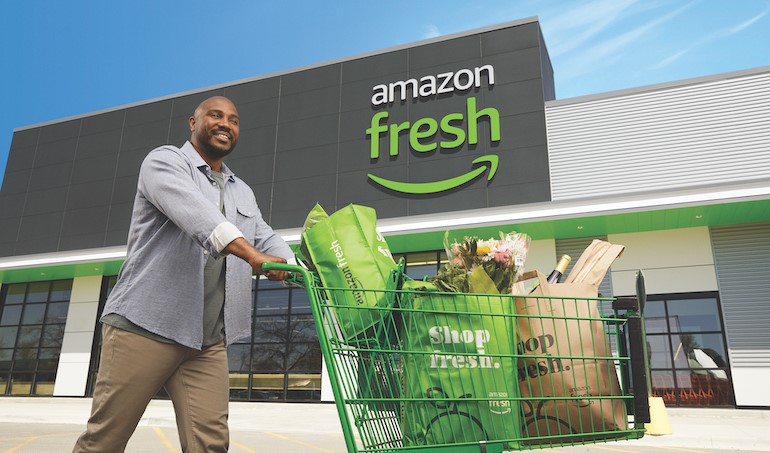
If there is one company in the food retail space that excels with customer data it is Amazon.  There can be no doubt that plant-based food products are fast becoming a mainstay on the family dinner table as Amazon Fresh has developed a private label line of Fresh Plant-based meat alternatives according to Steven Johnson, Grocerant Guru® at Tacoma, WA based Foodservice Solutions®.

In case you have not heard, Amazon is expanding its Fresh food brand with the addition of Fresh Plant-Based, a portfolio of plant-based products available online and in-store at Amazon Fresh. At Amazon customer get what customers want at a very competitive price and when you combine that with delivery that is second to none it is sure to be a home run according to Johnson.

There are fifteen products that are currently available, including patties, Italian meatballs, frozen Chick’n Nuggets and almond milks, and Amazon said in a release that it will continue to expand its Fresh Plant-Based product line this year “to bring customers more healthy, affordable plant-based products.”


So, with the introduction of Fresh Plant-Based products at Amazon you can clearly see that it comes at time of increased innovation within the meat alternatives category, particularly in frozen. Frozen meat, poultry and seafood alternatives sales reached $78 million in January 2022, an increase of 10.6% vs. a year ago, and about $33 million more than refrigerated alternatives, according to data from Chicago-based IRI. Regular readers of this blog know that Gen Z and Millennials are in constant search of ‘new food and flavors’ aka food discovery.

Anne-Marie Roerink, president of 210 Analytics, stated, “We continue to see enormous strength in [the frozen meat alternatives] department,” …. “Millennials love frozen foods and recognize them as convenient, healthy and fresh, and more and more boomers are also becoming involved as they turn into empty nesters. The big advantage of no perishable waste and being able to use small portions of a larger bag is driving a lot of that, too.”

The dairy alternatives market, meanwhile, is also experiencing a boost as cases of lactose intolerance rise and awareness of plant-based foods increases, New York-based market research and consulting company Reports and Data cited as it predicts the global dairy alternatives market will reach $50.87 billion in 2028 and register a revenue compound annual growth rate of 10.5% during the forecast period. So, why are you waiting to evolve?

Invite Foodservice Solutions® to complete a Grocerant ScoreCard, or for product positioning or placement assistance, or call our Grocerant Guru®.  Since 1991 Foodservice Solutions® of Tacoma, WA has been the global leader in the Grocerant niche. Contact: Steve@FoodserviceSolutions.us or 253-759-7869


Thursday, July 23, 2020

IKEA Sustaining the Brand Means Sustainable Meatballs


If success ever left clues within the food space IKEA doing over $2 Billion a year if food sales have left many according to Steven Johnson, Grocerant Guru® at Tacoma, WA based Foodservice Solutions®.  So, when IKEA announced that it planned to introduce a meat-free version of its iconic meatball as part of its strategy to make its food business more sustainable, Johnson said that’s what dynamic brands do, EVOLVE.
IKEA’s new plant-based meatball, are made with pea protein, oats, apples and potatoes, has only 4% of the climate footprint of the meat version, IKEA added. Are you noticing a trend here this week about restaurants and carbon footprints?
IKEA will roll out the plant based balls in the EU in August, followed by launches in North America, the Middle East and the Asia Pacific regions a couple of months later. So, we ask how is your brand bringing the ‘halo’ of better for you to the consumer?
Sharla Halvorson, health and sustainability manager for the IKEA food business globally, stated, “At IKEA we sell more than one billion meatballs every year. That’s right over 1 Billion meatballs and they are driving change with their key product.

Halvorson continued "If we were to convert about 20% of our meatball sales to plant balls that would mean around 8% reduction of our climate footprint for the food business at IKEA.” The new product replicates the taste and appearance of the meatballs and will be served with mashed potatoes, lingonberries, and cream sauce, similar to the original dish.
The retailer will also offer customers the option to buy frozen plant balls from the Swedish Food Market, and prepare them at home. Alexander Magnusson, chef and project leader at IKEA food, said, “In the development phase of the plant ball our key objective has been to recreate the meat-like taste and texture, only using plant-based ingredients.
“We have tried and tested different ingredients and methods and we are very pleased with the final results.” The plant balls are free from any animal-based ingredients and are therefore suitable for meatball lovers, flexitarians, vegetarians, and vegans, the retailer added.
Success does leave clues and consumers are dynamic not static and brands must be as well.  IKEA, once again is showing us how food retail leaders lead, by acting not standing still waiting for things to change.
Looking for success clues of your own? Foodservice Solutions® specializes in outsourced food marketing and business development ideations. We can help you identify, quantify and qualify additional food retail segment opportunities, technology, or a new menu product segment.  Foodservice Solutions® of Tacoma WA is the global leader in the Grocerant niche visit us on our social media sites by clicking one of the following links: Facebook,  LinkedIn, or Twitter