Showing posts with label Demographics. Show all posts

Monday, June 12, 2023

Gen Z Consumers are Exploring Options Is Your Company One of the Options


So, what is the big deal about attracting Gen Z consumers? Do you even need them, aren’t there enough other consumers that this cohort could be left out of your customer count mix?  No they can’t, according to Steven Johnson Grocerant Guru® at Tacoma, WA based Foodservice Solutions®.

Now then Gen Z is a digitally native set of consumers that want food with authenticity, that saves them time aka convenience, even more they like technology sustainable food products and don’t mind that robots make their meals.

Just what are the demographic makes of Gen Z, there are nearly 70 million Americans, or about 20% of the U.S. population, and has amassed $360 billion in disposable income. Oh yeah that $360 is a big reason you want them as customers. They are 13-to-24, which comes with a wide spectrum of wants and needs according to Lindsay Lyons, group director of customer strategic insights at The Coca-Cola Company and Robert Byrne, director of consumer and industry insights at Technomic. 

Mid Mad at a session during the National Restaurant Association Show, titled, “The Gen Z Effect: Redefining Dining Choices and New Experiences for a New Generation” Lyons and Byrne provided a simple reminder that the generation is far from homogenous, which is a detail that often gets lost in the chase.

Now then just for some added context, the younger consumers in this demographic tend to be more trendy, and less eco conscious. Ages 15-to-18 are an “inflection point,” where these consumers start to drive and make money. At 18, when many go to college or start working full-time, they become more influenced by social issues, they’re more convenience seeking and they’re more likely to cook.


The two explained that basically, the older cohort of Gen Z prioritizes convenience, while the younger cohort is looking for social, fun experiences and “a vibe.” That said, they’re also extremely health conscious, but they define that focus much differently than their predecessors.

“Healthy to them is comprehensive – it means things like balance, hygiene, diet, exercise, sleep, therapy. Doing things that they want to do. It also means immunity, focus, natural, hydration, all of that together,” Lyons said.

That said, they’re also digital and Byrne noted, this is the demographic where digital curiosity is moving into digital dependency. However, that doesn’t necessarily mean they want their entire world, including restaurants, to be fully digital. In fact, Byrne said expectations versus reality for this age group may be a bit surprising compared to their older peers. Consider that 23% of Gen Zers find food delivered via robot to be unappealing, for instance, while 38% find it to be appealing. This is compared to the 22% of millennials who find food delivered via robot to be unappealing, while 45% find it to be appealing.

Further, 30% of Gen Zers find food delivered via drone to be unappealing, while 32% find it to be appealing, versus 23% and 48% of millennials, respectively. As for those robot servers? Just 32% of Gen Zers find them to be appealing, versus 47% of millennials. What does this mean?

“Be careful with your extension of technology. There may be less receptivity to technology than one might think,” Byrne said. (Note: from the team at Foodservice Solutions® less than 1 percent have ever a drone delivery)


One reflection of the times we are now living, of the most important attributes sought by Gen Z is value, as 46% of these consumers have a second job according to Deloitte research. Byrne said price consciousness is based on necessity as many of these consumers are living hand-to-mouth.

Gen Z consumers definition of “value” extends well beyond price and their price sensitivity threshold actually decreases compared to other demographics. 68 percent of Gen Zers pay close attention to menu prices to find the best value, for instance, versus 71% of millennials who do the same. Sixty-three percent of Gen Zers “always compare prices before deciding what to buy,” versus 65% of millennials.

Now much like those before them, “Fewer than one-third of Gen Z consumers plan to cut back on restaurant usage because of high menu prices, which is below average. Menu price on its own is fading as part of the overall value equation,” Byrne said.


In an odd twist, the two reported that Gen Z consumers care “significantly less” concerned about menu price comparability, then the visual appeal of food, knowledgeable staff, clean bathrooms and being treated like a valued customer than their older counterparts.

So just what do they care about?

·         Effective advertising (another odd finding)

·         Natural, organic, sustainable, responsibly sourced items

·         Digital ordering/payment capabilities

·         Tech-enabled features to improve the overall experience

·         Kid-friendliness

·         Loyalty programs/rewards

Here is what was even more clear, YouTube is Gen Z’s most preferred social media channel, so that is a critical place to reach them. To illustrate the criticality of this channel, two out of three Gen Z consumers experience a brand for the first time on YouTube. That said, YouTube tends to feature long-form video and younger Gen Z consumers prefer short-form videos such as those found on TikTok, Instagram and YouTube Shorts, so this preference may be changing.

Overall, social media in general is usually the first place Gen Z consumers will interact with a brand, which is important because much of this content is organic and “therefore more trustworthy and less suss,” Byrne said.

Their favorite brand is Nike, which is noteworthy because it’s a lifestyle/luxury brand that consumers do not buy every day. What do Gen Z consumers buy every day? Food and beverage; therefore, food and beverage companies would be wise to understand the draw of Nike, according to Lyons, and that is mostly authenticity.

Yes, there is more, despite that $360 billion chest full of disposable income, their social and digital nature and their desire to have a “vibe” and an “experience,” Byrne cautioned, “Gen Z is not here to save your business.”


With more information available faster than ever before and in the palm of their hand, Gen Z seems to have not been trained to be a loyalty or frequent customer. There is hesitancy and discernment,” he said. “That’s why you have to be authentic.”

“They don’t want to be confused, so be very clear about what you’re doing,” Lyons added. “Meet them where they are, pull them in and make it that comprehensive experience they want.”

Attending the National Restaurant Show and visiting breakout sessions can be of great value for any fresh food retailer. However, ask questions, follow up questions to help improve your own insights.

Don’t over reach. Are you ready for some fresh ideations? Do your food marketing ideations look more like yesterday than tomorrow? Interested in learning how Foodservice Solutions® can edify your retail food brand while creating a platform for consumer convenient meal participation, differentiation and individualization?  Email us at: Steve@FoodserviceSolutions.us or visit us on our social media sites by clicking the following links: Facebook,  LinkedIn, or Twitter


Monday, April 3, 2023

Gen Z are Not Millennials, Not Gen X They are Different


Do you know who spends the most at your brand, who spends the most, who looks for your stores the most?  Is it Gen Z, Millennials, Gen X, Baby Boomers? The more important is the question who will be spending the most at your locations over the next 10 years?  According to Steven Johnson Grocerant Guru® at Tacoma, WA based Foodservice Solutions® Gen Z will soon be more important to your band than any other demographic.

Today the oldest members of Generation Z are coming of age and poised to become the most racially and ethnically diverse generation yet. That according to Mintel in addition they believe brands must start to recognize concerns particular to this group if they want to successfully connect to them.

Once again in a new report, Mintel breaks down three key findings brands will need to know about successfully marketing to Gen Z consumers. We think you should know this information as well so we are going to share information gleaned from the report.  

So, “Gen Z is the first generation to grow up with smartphones, tablets and platforms like social media and YouTube as the norm. The oldest Gen Z members (born 1996) were 11 when iPhones first launched (2007) and 14 when the iPad was introduced (2010).

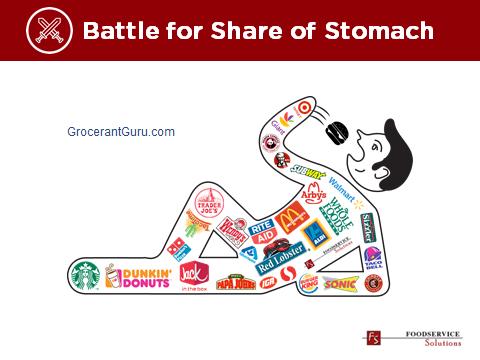
Admit it or Not

You Are in a Battle for

Share of Stomach


Generation Z members media habits and usage of digital technology will force businesses to approach them differently than previous generations. They are intolerant of traditional ads, which makes them tune out, but are open to being influenced by people they genuinely trust, including celebrities and micro-influencers (who Gen Z find more authentic and emotionally appealing).

What’s troubling about that for example is Gen Z members once embraced Kanye West, then dropped him faster than any brand could have imagined.  That’s and example of being youthful, problimic if you a brand endorsing West.  

So, Mintel thinks that Gen Z's usage of social media is a behavioral trait that also sets them apart, while simultaneously creating new avenues for marketers to connect with them. The cohort has a tendency to shop with smartphones, so brands and retailers should continue to leverage digital channels where these consumers typically find content to drive discovery, engagement and, ultimately, purchases, according to Mintel. Here lets see some more insights from Mintel:

1.       Gen Z members have experienced several economic and social traumas and are no longer willing to be silent about the cards they've been dealt, Mintel pointed out. They are open about their need for social and environmental change and will hold corporations accountable for their actions.

2.       Gen Z members are more likely than older consumers to pay attention to brands' values/missions and to support those that align with their own. For marketers, that creates the opportunity to connect causes with purchase behaviors. Category players that lead with a cause that aligns with Gen Z's values are better positioned to connect with this audience, thus driving more brand engagement and repeat purchases. 

3.       Gen Z members in the United States are more diverse than any previous generation in terms of race, gender and sexuality. They value individuality, while proudly supporting equity and inclusion, and will rally behind authentic and accurate representations.

4.       More than half of Gen Z consumers in the United States feel they would be better represented in advertising if more people without perfect lives were shown. Therefore, brands looking to increase their relatability among this generation would do well to focus on creating ads that embrace inclusivity and use real people rather than relying on celebrities, influencers or models, according to Mintel.

5.       Gen Z wants attainable representation and will increasingly expect brands to destigmatize flaws and work to undo unrealistic beauty standards.

6.       Members of Gen Z will also be more inclined to notice any instances of discrimination or underrepresentation.

7.       Almost one-third of Gen Z adults say they would feel better represented if they saw more racial diversity and more people who do not follow "traditional" gender stereotypes in advertising. For brands, it will be crucial to respect different choices and think the way Gen Z does on these issues, the firm added.


Mintel concludes that while marketers have mastered the art of understanding millennials, brands will need to diversify their approach to connect with Gen Z. They must understand the generation's nuances, target them with relevant products and craft relatable narratives while maintaining ethical standards. Now for more insights into Gen Z shopping habits from Mintel, click here.

For international corporate presentations, regional chain presentations, educational forums, or keynotes contact: Steven Johnson Grocerant Guru® at Tacoma, WA based Foodservice Solutions.  His extensive experience as a multi-unit restaurant operator, consultant, brand / product positioning expert, and public speaking will leave success clues for all. For more information visit GrocerantGuru.com, FoodserviceSolutions.US or call 1-253-759-7869 


Thursday, January 21, 2021

Are Millennials Now a Chain Restaurants Nightmare


Gen Z is taking center stage and O’ how times have changed within the grocerant niche Ready-2-Eat & Heat-N-Eat fresh prepared food niche. According to Steven Johnson, Grocerant Guru® at Tacoma, WA based Foodservice Solutions®, our new 2021 Grocerant ScoreCards found 82.3% of consumers don’t know what’s for dinner at Noon, and 61.1 don’t know what’ s for dinner at 4PM %.

Johnson continued “When asked if they wanted to cook dinner from scratch or assemble dinner from fresh meal components 90.4 % of Gen Z chose assemble from Fresh Prepared Meal Components and Millennials 82.7% chose meal components.” Of Millennials asked 78% reported that they would rather buy ‘dinner’ at a fast-food drive-thru rather than cooking at all.”


Foodservice Solutions® most recent online Grocerant ScoreCards conducted found what’s more disturbing to U.S. chain restaurants.  That is the ‘halo’ of better for you’ eating.  Millennials while not wanting to cook or assemble meals stated 81.4% said they would rather eat a homemade meal than go out for dinner. Here are the top three responses:

  1. The top reason consumers said they’d rather make dinner at home is it cost to much, cited by 74.5% of respondents.
  2. Desire to eat better (healthier) (60.1%)
  3. The house feels like a happy home, when I cook. (48.3%),

 The simple fact is restaurant price continue to climb in during 2020 they were up 3.4 year over year according to the National Restaurant Association. When consumers are asked about cooking at home it is important to note they are not talking today about cooking from scratch according to Johnson.  What they are talking about is meal assembly. 

Using Grocerant niche Ready-2-Eat and Heat-N-Eat fresh prepared food that can be mix & matched into a perfect family meal is how America is shopping for food.  If, success does leave clues and it does.  Retailers and restaurants need to follow the clues to the Grocerant niche. If you think Millennials will continue to order out, and dine-in like they did in the past you just might be wrong.  Unless you have what, they want and how they want it.  Do you?

Interested in learning how Foodservice Solutions 5P’s of Food Marketing can edify your retail food brand while creating a platform for consumer convenient meal participation, differentiation and individualization? Email us at: Steve@FoodserviceSolutions.us or visit:  www.FoodserviceSolutions.us for more information.


Saturday, May 23, 2020

Gen Z Looking Food Forward


While Millennials are starting to buy houses and have children most Gen Z of college age or preparing for what comes after high school. One thing is clear like the generation before from the want to discover the world, and want it be a different world than that of their grandparents, parents, or even Millennials according to Steven Johnson, Grocerant Guru® at Tacoma, WA based Foodservice Solutions®.
Here is why Gen Z has become so important to foodservice they account for 27% of the U.S. population. Like the generation before them Gen Z’s has a desire for seamless digital experiences, purpose, and convenience all fast, where digital differentiation is discovery that they can share.
 Here are some of our ideations to help you reach Gen Z:
·         Esports present a platform that is ‘new’, digital, interactive and indoor and can be viewed from a mobile devise. Consider a tie-in or video wall inside your foodservice store front.
·         Handheld video the ilk of Twitch and other video game streaming services, are a perfect platform for product placement.
·         Driving in-store foodservice frequency will require a high level of digital engagement, along with a interactive platform that can be simultaneously accessed as Gen Z likes to do more than one thing at a time.
·         Food must have a platform of ‘full’ flavor with a story filled with authenticity. Once again Gen Z likes handheld food for immediate consumption but with a twist.  They are looking for items that have a ‘halo’ of better for you.
·         Given their propensity of everything digital food delivery is a platform that must have been designed for Gen Z as there is no migration to food delivery. Fast fresh full-flavored food delivered is simply a form of convenience they will not give up.
Success does leave clues. One clue that time and time again continues to resurface is “the consumer is dynamic not static” Gen Z will be more demanding, less patient, in search of ‘the next big thing for some time to come. 
Regular readers of this blog know that ‘The Consumer is dynamic not static’ is the common refrain of Steven Johnson, Grocerant Guru® at Tacoma, WA based Foodservice Solutions®.  Our Grocerant Guru® can help your company 253-759-7869.  

Friday, April 13, 2018

Generation Z Tomorrow’s Customers Will You be Ready to Feed Them?


Children of Generation Z growing up in America today are living in a world adults are working hard to cope with some homes are cutting the cord (cable) so there is no traditional TV, political chaos abounds, and picking up dinner  is more common that cooking at home according to Steven Johnson Grocerant Guru® at Tacoma, WA based Foodservice Solutions®. 
According to the study titled Understanding Tomorrow's Tastemakers Today, that explores the dining culture, attitudes and behaviors of more than 900 K-12 consumers, ranging in age from 8 to 18, toward traditional foodservice segments. 
"Today's kids' expectations for dining outside the home are extremely high and will continue to increase as they become young adults," said Sharon Olson, executive director of Y-Pulse. "Certain trends, such as culinary adventure and healthfulness in food, typically accelerate as younger consumers grow older."
Food media, peers and the need for community heavily influence the current food culture in young consumers, according to the study. It identified five things food companies and restaurants need to know about Gen Z consumers' dining preferences:
1.       They enjoy contradicting food trends. Young consumers enjoy culinary adventure and comfort foods with equal zeal. Seventy-one percent of those surveyed like trying new dishes and flavors at restaurants, while 91 percent of kids like ordering their favorite foods or foods that they are familiar with.
 
2.       They want the feeling of community. Despite their love for smartphones and convenience, young consumers are not immune to the need for community feeling. Their choices in restaurants reflect this priority. Two-thirds (66 percent) surveyed like restaurants that offer shareable food and three-fourths (76 percent) of kids said they like to hang out with their friends at a restaurant.
 
3.       They are heavily influenced by food media. Young consumers have a healthy appetite for food media consumption, as 56 percent said they like to watch the Food Network and 52 percent of these consumers said they like to watch "Tasty" style videos on Facebook and Instagram.
 
4.       They are influenced by perceptions of healthy food. Much like their predecessors, Gen Z consumers care very much about eating healthy food and are influenced by perceptions of healthy eating. When asked about their perspective on eating healthy, 40 percent said that the snacks offered in school vending machines are healthy.
 
5.       They crave independence in food. When it comes to the Gen Z consumer segment, kids are growing up with a strong sense of independence and decisions in food. Fifty-eight percent said they like to cook for themselves and 50 percent of them said they like to get snacks from the convenience store.
How are you preparing to sell food to Gen Z consumers?  Outside eyes can drive inside results.  Don’t react to customer migration.  Become a proactive retailer and understand how the grocerant niche can help you drive top line sales and bottom line profits.
Foodservice Solutions® specializes in outsourced business development. We can help you identify, quantify and qualify additional food retail segment opportunities or a new menu product segment and brand and menu integration strategy.  Foodservice Solutions® of Tacoma WA is the global leader in the Grocerant niche visit Facebook.com/Steven Johnson, Linkedin.com/in/grocerant/ or twitter.com/grocerant