Friday, February 11, 2022

C-stores Leveraging Technology to Drive Sales and Customer Relevance


Many of you I’m sure while in college were required to read Spencer Johnson M.D. book ‘Who Moved My Cheese?’ In 2022, all food retailers must ask themselves not ‘Who Moved My Cheese? Rather they should ask ‘How is my customer buying what I have been selling if they are not here?

To date, there have been no reports that consumer are loosing weight at droves, there are reports of the ‘pandemic 15’ as Americans seem to be gaining weight.  That said where are they buying and where are they eating?  

Steven Johnson, Grocerant Guru® at Tacoma, WA based Foodservice Solutions®, stated, “retailers must look beyond their current four walls and empower their brand messaging to become handheld. All the while simultaneously empowering consumers to buy what they have always bought using digital technology.”

Today, the informational superhighway may well be more important to a C-store the traffic count on the street in front of their store. Now is the time that food retail must be bringing branded digital services to the forefront. After all, as regular reader of this blog know C-store primary and secondary target customers Gen Z and Millennials are digital native and they expect fresh fast full service from all retailers.


Now, convenience channel retailers are exploring additional tech-forward services. They include bitcoin ATMs, electric vehicle (EV) charging stations, digital lottery, car wash subscriptions, and more. These amenities are not major profit centers. Rather, the emphasis is on using these services to further differentiate c-store brands, drive traffic, and increase dwell times.

It’s at the intersection of the information superhighway and your retail location that AlixPartners new study interesting insights that our Grocerant Guru® believes all food retailers should read.  Eric Dzwonczyk, a global co-leader of the restaurants, hospitality and leisure practice at AlixPartners, stated, “For years, c-stores invested in foodservice to get people into stores. Now, they’re looking at the next generation of ‘stuff’ to pull shoppers in,” “There’s much convergence of different themes, with formats changing quickly.”

Let’s see what else he found as told to csnews.com:

Electric Vehicle Charging  

EV charging is the most popular new service. Its future seems certain, with President Biden calling for half of new vehicles to be electric by 2030. EVs were expected to represent about 3.4 percent of new car sales in 2021, according to EVAdoption, but the number of charging stations is already rising. In 2018, there were 64,000 in the United States. By 2020, there were roughly 90,000, according to figures from the Alternative Fuels Data Center and consultancy InsideEVs.

“Top of line with everyone is EV,” noted Dzwonczyk. “It’s going to happen.”


The nation’s largest c-store operator, Irving, Texas-based 7-Eleven Inc., is being aggressive about EVs. By the end of 2022, it will install 500 direct-current, fast-charging EV ports at 250 U.S. and Canada locations. Currently, it has 22 stores that offer EV charging. All of these locations are adjacent to major roads and highways.

Other retailers are optimistic but proceeding cautiously.

“EV is evolving quickly,” said Kevin Kelly, senior vice president of hospitality at Westlake, Ohio-based TravelCenters of America Inc. (TA), which will soon have charging at nine of its 275 locations. “Good dwell times spell opportunity. We want to drive people to non-fuel transactions. But it’s emerging technology. We don’t want to invest in the wrong infrastructure. How do you balance the cost and monetize it? Do you build a battery facility or a solar field to supply it? We’re hoping government will supplement.”

According to AlixPartners, 80 percent of EV charging is now done at home, 13 percent is done at highway c-stores, and just 3 percent is done at other c-stores, where dwell time is often short. Hence, not all convenience stores will make for successful EV destinations.

Truck stops and travel centers are well positioned for EV charging. They have interstate locations, with myriad amenities already driving up dwell time.

“We’re not the corner store,” said TA’s Kelly. “Dwell time is long. We have quick- and full-service restaurants and c-stores. You can walk your pet. It’s like a miniature community. Our large sites are a competitive advantage.” TA also serves truck drivers with 29 on-site Verizon stores, 27 barber shops, 26 medical centers, basketball hoops, and fitness centers.

Digital Lottery

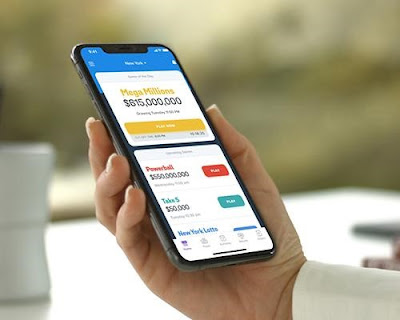
Technology, the pandemic and consumers’ desire for convenience are propelling the growth of digital lottery. In 2020, sales increased 25.7 percent, according to Global Industry Analysts Inc. For 2021, digital lottery sales were projected to reach $2.3 billion.

In July of last year, Laval, Quebec-based Alimentation Couche-Tard Inc., the parent company of Circle K, partnered with Jackpocket to begin offering digital lottery through 1,300 locations across Arkansas, Colorado, New Hampshire, New York, Ohio and Texas.

Jackpocket is a licensed third-party lottery app that lets users order official state lottery tickets fulfilled by a licensed lottery retail partner. Digital lottery is not currently legal in all states.

At Circle K, customers receive exclusive deals via the Jackpocket app and by email, including “surprise alerts to drive foot traffic,” said Jackpocket CEO Pete Sullivan. Circle K is promoting the lottery app in its stores, at fuel pumps, in digital ads, via emails, and via a team member incentive program. The app was also rolled out to sister brand, Holiday.

“We’re seeing demand for digital options in every industry,” noted Sullivan. “We want to meet people where they are. We don’t anticipate lottery moving away from convenience stores completely. We’re here to offer an option for those who find it easier to play from their smartphone.”

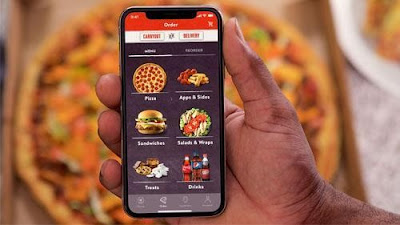
Not all digital lotteries are app-based. In June 2021, Whitehouse Station, N.J.-based QuickChek Corp. (which is owned by Murphy USA Inc.) launched a web-based platform with Lotto.com that lets New Jersey shoppers purchase lottery tickets on any device without having to download an app or deposit money into an account. Payment is managed by PCI-compliant payment providers.

Don Leech, QuickChek’s vice president of marketing and operations, said the partnership complements the chain’s other digital services. “We’ve been providing convenience through mobile ordering, our mobile rewards app, and the ability to order delivery online. Our [Lotto.com] partnership lets us further meet the needs of consumers who prefer shopping and paying online.”

Bitcoin ATMs

Historically, c-stores have served unbanked and underbanked consumers with services such as check-cashing, MoneyGram, Western Union, and money orders. Unbanked consumers lack a checking or savings account; the underbanked have one but not both.

According to published reports, 25 percent of consumers overall fit into one of these two categories. And among just the millennial generation, 33 percent are underbanked.

These groups are seen as viable customers for bitcoin ATMs, a new, emerging service in the convenience channel. Bitcoin ATMs let users pay cash to buy and sell virtual cryptocurrencies. Bitcoin can be stored in a digital wallet, sent to others, and used as payment with certain retailers. It is decentralized, meaning it is not controlled by a banking system. There are no remittance fees for international transactions and no currency exchange rates. Transactions are stored on the blockchain.

Roughly 3 percent of c-stores currently offer bitcoin ATMs, said Brandon Mitz, CEO and president of Atlanta-based Bitcoin Depot. But with c-stores’ complementary demographics and the need to drive traffic, he believes that number will climb.

“When you bring customers into stores, it creates many opportunities for impulse buys and to learn about products. The largest category of bitcoin users are millennials. Millennials — and Gen Z — value convenience,” Mitz explained.

Bitcoin ATMs occupy an 18- by 22-inch footprint. Retailers receive rent regardless of performance. If machines perform well, the compensation is higher.

Early entrant Circle K is optimistic about bitcoin, with machines in 1,000 stores. Plans call for expansion to 10,000 stores. “Our Bitcoin Depot partnership gives our brand an important, early presence in the fast-growing cryptocurrency marketplace as a convenient destination where customers can buy bitcoin,” Denny Tewell, senior vice president of global merchandise and procurement for Circle K, said in a prepared statement.

Other retailers are unsure about how bitcoin will fit in and are proceeding more slowly. TravelCenters of America, for instance, is piloting 20 deposit-only bitcoin locations.

"It’s in the early stages and not very transactional from a consumer standpoint,” said TA’s Kelly. “Digital interfaces are becoming more important. But there’s uncertainty about how bitcoin will evolve as a consumer tool." 

Are you looking a customer ahead? Are you ready for some fresh ideations? Do your food marketing tactics look more like yesterday that tomorrow?  Visit GrocerantGuru.com for more information or contact: Steve@FoodserviceSolutions.us Remember success does leave clues and we just may have the clue you need to propel your continued success.

In a Battle for Share of Stomach

You Can Win


Thursday, February 10, 2022

Peter Piper Pizza Smaller Footprint Faster Service


The cost of hiring new employees continues to rise.  Employee turnover seems as if it is at an all time high and many chain restaurants are reevaluating their business models to find a way to stabilize their workforce, reduce cost, while still delivering on their brands promise. 

Consumers are dynamic not static, business that want to maintain a long-term relationship with consumers must evolve with relevance or they will have fewer year over year customer visits according to Steven Johnson, Grocerant Guru® at Tacoma, WA based Foodservice Solutions®.

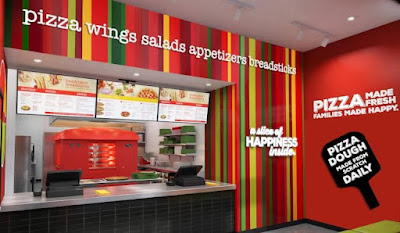
Peter Piper Pizza, is moving forward in an attempt to continue to drive growth, while reducing cost, and developing top-line sales and bottom-line profits with a new revised business model according to Johnson.  Focusing on consumer valuable touchpoints Peter Piper Pizza will introduce its new off-premise-only concept in Phoenix with the opening of the first of three Peter Piper Express locations on March 1, at 2322 E. Thomas Road, Suite 103.  

This should come as no surprise to anyone as Peter Piper saw off-premise sales skyrocket in 2021 with strong demand for its scratch-made pizza and menu items. Recently, Peter Piper Pizza reported that off-premise sales now account for more than 40% of sales at its corporate-owned full-service locations, with some locations experiencing even more. The company projects its Express locations will be 15% the size of a traditional Peter Piper restaurant, which leads to lower operational costs. 


Each Peter Piper Express will serve a full menu featuring its pizzas crafted from dough made fresh daily, salads, appetizers, desserts and bottled beverages. The highlight of each location is a full-size kitchen equipped with a custom Roto-Flex pizza oven capable of baking over 200 delicious pizzas per hour.  

CEC Entertainment LLC President and CEO David McKillips, stated, “The strong demand for our scratch-made pizza and quality menu offerings makes the Peter Piper Express concept a great growth vehicle for the brand and a natural complement to our popular full-service offering,” ... “Based on the success of these new units, we believe the concept will be attractive to our current and potential franchisees and will allow further brand penetration in existing and new markets at a substantially lower investment with a very attractive rate of returns.” 

This new Express concept is part of Peter Piper Pizza’s larger initiative to meet changing consumer demands on several fronts. The company recently began updating its arcades with the launch of funpass, which allows guests to purchase and reload cards directly from a kiosk to play new and classic games in Peter Piper’s “Game On” arcade area. The new system eliminates the need for game tokens and paper prize tickets and has increased total arcade play time by 23%. The rollout to all locations is expected to be complete by the end of 2022.  

Invite Foodservice Solutions® to complete a Grocerant ScoreCard, or for product positioning or placement assistance, or call our Grocerant Guru®.  Since 1991 Foodservice Solutions® of Tacoma, WA has been the global leader in the Grocerant niche. Contact: Steve@FoodserviceSolutions.us or 253-759-7869 


Wednesday, February 9, 2022

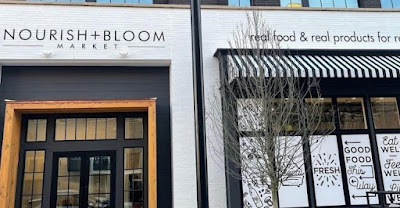
Nourish + Bloom Market Customer Focused Positioned to Disrupt Legacy Grocery Retail


Very few companies go wrong when they focus on the consumer.  Today, startup Nourish + Bloom Market is focusing on the consumer while integrating consumer facing technology that will save time starved consumers both time and money.

Steven Johnson, Grocerant Guru® at Tacoma, WA based Foodservice Solutions® stated Gen Z and Millennials are digital natives and they expect technology to continue to help them live “The Life”. More important technology adds relevance for them and when you combine the ability to save both time and money they will migrate too and adopt brands that can do that and Nourish + Bloom Market just might just be the company to disrupt the legacy grocery store business model once and for all.”

Technology systems integrator UST has formed a partnership with Nourish + Bloom Market that they said has the potential to open more than 500 autonomous grocery stores. Johnson said this new grocery store format platform with drive new electricity into the grocery sector while elevating Nourish + Bloom Markets brand with new electricity.

In a Battle for Share of Stomach

You Can Win


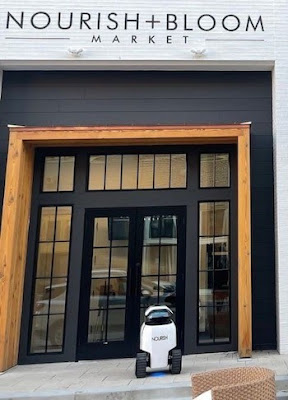
The first Nourish + Bloom Market, sized at 1,500 square feet, opened on Jan. 21 in Fayetteville, Ga. Located at 300 Trilith Pkwy., the high-tech outlet offers “walk in, walk out” functionality, enabling shoppers to take what they want from the shelves and skip the checkout line, with their purchases tallied and payment processed automatically.

The store will be operating 24/7, Nourish + Bloom stocks over 1,500 SKUs, including produce, meat, baked goods, dairy, center-store groceries, household items and prepared meals. The store is anchored by a section called Bistro, which offers freshly made breakfast, lunch and dinner items such as sandwiches, salads and healthy rice bowls. Nourish + Bloom noted that it favors local brands to help reduce its carbon footprint. Yes, that’s right they have positioned the store right in the middle of grocerant niche Ready-2-Eat and Heat-N-Eat fresh prepared niche.

Jilea Hemmings, founder and CEO of Nourish + Bloom Market, stated, “The idea of the store occurred to us during the pandemic. We wanted to provide a solution for customers where they wouldn’t have to wait in line or touch anything while checking out,” she explained. “With UST’s help, we have successfully created a hybrid autonomous technology to offer that solution and combat food insecurities in underserved communities. We are confident that this technology will change how customers shop in the next three to five years.”

So, Nourish + Bloom is powered by an end-to-end Autonomous Store in Box solution from Aliso Viejo, Calif.-based UST, including retail back-office software, the Bistro module, and full integration services for diverse systems to provide a frictionless shopping experience. Shoppers enter by scanning a QR code from a UST-built mobile app at a turnstile. Items selected are tracked via LiDAR (light detection and ranging) cameras and automatically added to a virtual shopping cart, with the information is sent to a back-end software developed by UST.

More than you see as, UST Vision Checkout is used for large merchandise assortment outside the autonomous store. The self-checkout point-of-sale system employs computer vision to identify products, while voice and gesture artificial intelligence technologies speed checkout for Nourish + Bloom customers, UST said.

The POS solution also uses barcode-scanning and touchscreen functionality for specific merchandise sections like age-restricted products, frozen foods, and fruit and vegetables, as well as the Bistro prepared foods section. The UST Product Box tool provides quick onboarding of SKUs requiring computer vision training, and the UST Cold Truth solution brings IoT-based, real-time food temperature measurement at shelf level to foster more efficient operations.

The automated product recognition in Nourish & Bloom Market store is performed by SHEKEL Brainweigh’s Product Aware Technology (PAT), based on IoT load sensors, AI models and machine learning algorithms, UST said. Hitachi Vantara provides the store’s 3D LiDAR technology, which enables monitoring of customers throughout the aisles and linking products to their shopping cart.

Subhodip Bandyopadhyay, general manager of emerging technology for UST, stated, “The store uses UST Vision Checkout for large merchandise assortment outside the autonomous store. UST Vision Checkout is a self-checkout POS that uses computer vision to identify SKUs”. “Along with this, voice and gesture AI technology leads to a three-times faster checkout experience for customers of Nourish + Bloom. Hybrid autonomous store technology uses Intel’s Edge optimized technology infrastructure and uses multiple Microsoft technologies, including Azure Cloud.”

It works in a hand-held format that so many Gen Z and Millennials use, as Nourish + Bloom also offers online grocery service via a UST-built e-commerce app, including delivery, coffee and Bistro subscriptions. UST’s autonomous store system also is integrates with self-driven vehicles from DAX robotics for last-mile delivery. Delivery robots named “Nourish” and “Bloom” also deliver online orders in temperature-controlled compartments right to customers’ doorsteps.


Keith Pickens, general manager and retail domain leader at UST, stated, “UST Frictionless Solutions’ hybrid autonomous store will help N+B scale faster, cheaper and better and provide significant ROI necessary for further expansion”. “We are proud to partner with N+B in its endeavor to become the most-loved emerging retailer in North America.”  When will legacy grocery refer to gone forever?

When you think brand relevance in an evolving world, that will edify brand value with relevance and new electricity? According to Johnson, “Brand relevance is in part driven with innovation in new food products in combination with new avenues of distribution all of which are the platform for the new electricity.” 

Johnson stated “that in my minds-eye the new electricity must be very efficient for the supply and includes such things as fresh foods, smaller footprint, developing brands, unique urban clothing, grocerant positioning, fresh food messaging, autonomous delivery, cashier-less retail, plates, glasses, cash-less payments, digital hand-held marketing.

All retailers to survive the next generation of retail must embrace the artificial intelligence revolution while simultaneously embracing fresh food that is portable according to Johnson.

Do your food marketing ideas look more like yesterday than tomorrow? Interested in learning how our Grocerant Guru® can edify your retail food brand while creating a platform for consumer convenient meal participation, differentiation and individualization?  Email us at: Steve@FoodserviceSolutions.us or visit: us on our social media sites by clicking one of the following links: Facebook,  LinkedIn, or Twitter


Tuesday, February 8, 2022

Schnuck Markets Targeting Restaurant Dinner Customers


When you are tired, on your way home from work, and don’t know what’s for dinner; Schnuck Markets wants you to think about their grocerant niche Ready-2-Eat and Heat-N-Eat fresh prepared meals and meal components first.

According to Steven Johnson, Grocerant Guru® at Tacoma, WA based Foodservice Solutions® the first 2022 Grocerant Scorecards are out and here is some of what they found:

1.       Recent Grocerant ScoreCards found 81.1% of consumers don’t know what’s for dinner at Noon, and 61.1 don’t know what’ s for dinner at 4PM %.

2.       Roughly 63.7% of consumers purchase prepared food items from a retail location at least three times a month.

3.       79.6% all dinners have at least 1 grocerant niche Ready-2-Eat and Heat-N-Eat meal component and 66.6% have two meal components.

4.       When asked if they wanted to cook dinner from scratch or assemble dinner from fresh meal components 91.3 % of Gen Z chose assemble from Fresh Prepared Meal Components and Millennials 83.4% chose meal components.

5.       Seventy-three percent of retail prepared food purchases are taken to go

6.       Prepared food purchases are frequently a planned purchase among 61.2% of shoppers, while 40.9% of shoppers said they buy prepared foods on impulse. Dinner has the highest amount of prepared food buys with 81.7% of respondents making purchases for that meal, while lunch comes in at 76.9% and breakfast at 61.4%.

Looking more like a restaurant ordering counter than a legacy grocery store deli, Schnuck Markets has expanded its Deli Order Ahead program with the addition of touchscreen kiosks at another 30 stores.

That’s right, self-service kiosks enable shoppers to order sliced meat and cheese, salads and prepared foods without having to wait on line at the deli counter, just like restaurants offer.  So, customer after entering their smartphone number, customers receive a text when their order is ready. The text tells them to pick up their order at the cooler next to the kiosk.

Schnucks noted that the 30 new stores offering Deli Order Ahead also can use the service remotely via the Schnucks Rewards app, allowing them to place deli orders from home for same-day pickup.

With Deli Order Ahead, Schnucks customers can skip the line at the deli counter by placing orders for sliced meat and cheese, salads and prepared foods via touchscreen kiosks. Now when you are at work, tired and don’t want a quick service restaurant meal, you can go to Schnuck Markets.

Chace MacMullan, senior director of digital experience at Schnuck Markets, stated, “The kiosks offer a simple, convenient, and pain-free alternative to fulfilling orders placed at the deli counter... “This is one of the many ways we are providing customers best-in-fresh solutions while also making it easier for teammates to manage orders at the deli counter.”

Currently, Schnucks now has Deli Order Ahead stations at 67 stores. Stores adding the Deli Order Ahead kiosks include 15 locations in Missouri, 14 in Illinois and one in Indiana. Overall, Schnucks operates 111 supermarkets in Missouri, Illinois, Indiana and Wisconsin. shoppers to order custom cakes via the Schnucks Rewards app and the Schnucks website for pickup in the bakery department. At launch, the service made its debut at 95 stores. The supermarket chain also offers order-ahead capability in its prepared foods and floral departments. Who is selling dinner to your customers?

Looking for success clues of your own? Foodservice Solutions® specializes in outsourced food marketing and business development ideations. We can help you identify, quantify and qualify additional food retail segment opportunities, technology, or a new menu product segment.  Foodservice Solutions® of Tacoma WA is the global leader in the Grocerant niche visit us on our social media sites by clicking one of the following links: Facebook,  LinkedIn, or Twitter 


Monday, February 7, 2022

Domino’s Marketing Team is Crushing It


Famous for service fresh food fast, the C-level team at Domino's Pizza has been crushing the competition with both technology and marketing for some time now according to Steven Johnson, Grocerant Guru® at Tacoma, WA based Foodservice Solutions®.

When it comes to grocerant niche Ready-2-Eat and Heat-N-Eat fresh full-flavored food that is portable Domino’s expanded non-pizza menu has become a staple in the food industry and a hallmark of grocerant niche success according to Johnson.

Domino’s consumer focused interactive participatory marketing programs continue to expand the halo of the brands consumer touchpoints.  Here is just another example how Domino’s believes every great delivery driver deserves a tip. Thousands of carryout customers serve as their own delivery drivers each day, and now, Domino's is tipping them. Carryout customers who order online can claim a $3 tip to use on their next online carryout order, thanks to the largest pizza company in the world.

Art D'Elia, Domino's executive president – chief marketing officer, stated, "It takes skill to get pizza from a Domino's store to your door," … "As a reward, Domino's is giving a $3 tip to online carryout customers who take the time and energy out of their day to act as their own delivery drivers. After all, we think they deserve it."

So, now carryout customers who order online now through May 22, 2022, are eligible to claim the $3 coupon code, which is redeemable for another online carryout order placed the following week (with a minimum purchase of $5 before tax and gratuity). Plus, customers can combine their carryout tip with their favorite carryout offer, making for a tasty deal. Can your brand keep up with that?

Do you understand the how great interactive participatory marketing can help you garner new customers and new employees?

Don’t over reach. Are you ready for some fresh ideations? Do your food marketing ideations look more like yesterday than tomorrow? Interested in learning how Foodservice Solutions® can edify your retail food brand while creating a platform for consumer convenient meal participation, differentiation and individualization?  Email us at: Steve@FoodserviceSolutions.us or visit us on our social media sites by clicking the following links: Facebook,  LinkedIn, or Twitter


Sunday, February 6, 2022

What’s on C-Stores Menu for 2022


Convenience stores continue to evolve with consumers.  Leveraging the strength of their brands C-stores are migrating to new business models with the potential to drive greater growth of top-line sales and bottom-line profits according to Steven Johnson, Grocerant Guru® at Tacoma, WA based Foodservice Solutions®.

According to Johnson, what’s on the menu in 2022 is “more and more wine, craft beer, liquor, along with non-alcoholic beverages that both Gen Z and Millennials are drawn too.”

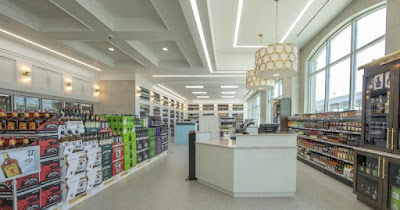
Regular reader of this blog know that Parker’s Convenience store recently opened, Parker’s Spirits, with plans for more units.  Now Kwik Trip is growing its family of brands with the launch of Kwik Spirits. The new store format features a wide variety of products such as wine, liquor, beer and tobacco, including humidor cigars, roll-your-own, chewing tobacco, vape products and cigarettes.


Both Gen Z and Millennials are increasingly trying no- and low-ABV drinks as they focus more on health and moderation, making the low-ABV movement a trend to watch out for this year as we previously wrote about. Here are some facts we previously quoted.

No- and low-alcohol beverage sales increased 33 percent to $331 million over the last 52 weeks, according to Nielsen, while IWSR found that the non-alcoholic spirits category is expected to grow 35 percent by 2023.

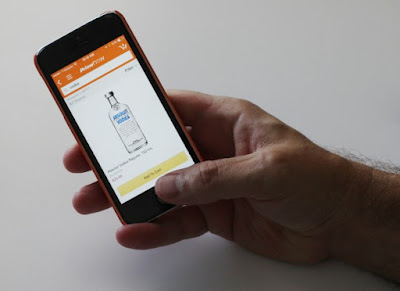
Recently DoorDash advised retailers to stock interesting and unique no- and low-ABV alternatives alongside their beer and liquor options to enable customers who want to lower their alcohol intake to still be able to enjoy a delicious drink. Placing them near or next to alcohol offerings allows customers to discover them organically.

Other 2022 trends include:

·         Hard seltzer bubbles up — Hard seltzer brands are growing with fun, fruity flavors such as Black Cherry and Spicy Pineapple drawing in customers. New spiked beverage such as hard kombucha, hard iced tea and more are likely to follow. If a beverage type exists, a hard version is likely on the way.

·         Adaptogens go mainstream — Adaptogens are herbal pharmaceuticals such as roots and herbs from Chinese and Ayurvedic healing traditions that supposedly help the body deal with stress. Common ingredients include ashwagandha, lavender, ginseng, tulsi and reishi. Their effectiveness may be up for scientific debate, but they remain popular with consumers who use them as an alternative or addition to drinking alcohol.

·         Natural wine sales spike — Wines that are made with organic ingredients, have no additives and have had little intervention in their fermentation have recently grown in popularity after the Institute for Origins and Quality, the French Ministry for Agriculture and the French Fraud Control Office agreed on a common definition of "natural wine." Organic wine sales are projected to reach 87.5 million cases globally this year.


·         Cocktails to-go — Initially prompted by the COVID-19 pandemic, offering to-go cocktails has become standard for many restaurants and retailers alike, and packaged ready-to-drink beverages such as canned margaritas are among the fastest-growing alcohol segments. Convenience and recyclability are two major factors behind the boom, as canned drinks are portable, less fragile than glass containers and more recyclable.

·         Alcohol delivery drives sales — Alcohol delivery sales are on the rise in the wake of the pandemic, and experts predict this trend will hold, whether it is due to safety concerns or a preference for convenience. Restaurants have also found that alcohol delivery helps boost profit margins.

Now as the undercurrent of legalization of cannabis buzz is growing according to Johnson, C-stores state by state are positioned to reap the benefit of legalization better than any other food retailer.  What do you think?

Invite Foodservice Solutions® to complete a Grocerant ScoreCard, or for product positioning or placement assistance, or call our Grocerant Guru®.  Since 1991 Foodservice Solutions® of Tacoma, WA has been the global leader in the Grocerant niche. Contact: Steve@FoodserviceSolutions.us or 253-759-7869