Saturday, February 5, 2022

Virtual Restaurants and Social-Media a Powerful Competitive Platform


At the intersection of the fastest cultural revolution the world has ever seen, and food sales, we find the undercurrent of disruption the likes we have never before seen within the retail food space. Steven Johnson, Grocerant Guru® at Tacoma WA based Foodservice Solutions®, stated, “virtual restaurants selling plant based full-flavored entrees for less, combined with hand-held mobile social media providing instant gratification have the potential to knock the wind out of the sales of most legacy food retailers.”

Today, I want to share an article and report from Accenture Research that should make every food retailer want to reevaluate their business plan moving forward.  Here is the article:

“In just one day in October 2021, two of China's top live-streamers, Li Jiaqi and Viya, sold $3 billion worth of goods1. That's roughly three times Amazon's average daily sales. This is the power of social commerce. And it’s set to sweep the world, growing into a $1.2 trillion wave of change by 20252. Social commerce offers something radically different from traditional e-commerce by weaving buying and selling into the fabric of everyday life and through a real sense of community and connection.


It's set to revolutionize the way we shop: affording new opportunities for people to participate in the global economy as consumers, creators, influencers and sellers, resulting in a power shift from big to small. This will impact every brand, retailer and platform business. No one can afford to ignore it. This essay explores the scale of the change, what’s driving it, and the implications for companies across industries.

The social planet

The global pandemic has highlighted the importance of “connection” and has forced us to adapt and connect in new ways. Accenture Research3 revealed:

63%

feel connected with friends and family virtually

42%

feel connected using virtual experiences

49%

say communities have found new ways to support one another

62%

feel closer to friends and family, 51% to immediate neighbors and 44% to their communities

Around 3.5 billion people4– 44%+ of the world’s population – use social media, with consumers in developing countries more likely to have a smartphone with social media apps than they are a laptop. On average consumers spend two and a half hours a day on social platforms5, with more than 300 million new social media users coming online between 2019 and 20206. For many people, social platforms are the entry point for everything they do online - news, entertainment, and communication. Now commerce is in the mix too. And it could soon become so powerful as a destination in its own right that it starts to threaten the dominance of e-commerce and search giants.

"It’s word of mouth on steroids"


— SANDIE HAWKINS, TikTok’s GM of North America Solutions7 on social commerce

People want to buy products and services based on recommendations and inspiration from people they trust. That could be family, friends and communities, and it can also be authentic influencers they follow on social media. They want to feel inspired, informed and confident in what they buy. Social commerce serves these needs, providing an enhanced shopping experience that sparks discovery, enables personalization and leverages individuals’ expertise and authenticity to build trust. All of this is already playing out in China, where social commerce on platforms like Taobao Live, Xiaohongshu (Little Red Book), and others generated more than $400 billion in sales in 2021 alone8.

Understanding social commerce business

So, what makes social commerce so different? Fundamentally, it represents a real shift in power from retailers and brands to people. And it's being turbocharged by the rise of social media. In contrast to the relative anonymity of big-box retailers and transactional emphasis of e-commerce behemoths, it's commerce available where people choose to spend their time and underpinned by the authenticity and trust that social connections provide. It's nothing short of a people-powered democratic retail revolution. And it's incredibly effective. Why? Because it seamlessly blends social experiences and e-commerce transactions through a single path to purchase, all enabled by a single platform.


Social commerce engages in three principal ways, via brands, influencers or individuals themselves:

1.       Content-driven: Unique content created by brands, influencers or individuals drives authentic discovery, engagement, and action. For example, social media users are discovering new goods and experiences via shoppable posts and in-app stores on Pinterest, YouTube, TikTok, Facebook, and Instagram to name a few.

2.       Experience-driven: These experience driven channels enable shopping within an overall experience, most commonly livestreaming, but could also include AR / VR experiences or gaming. Look at Obsess's "Shop with Friends" which enables groups to visit virtual shops with their friends9.

3.       Network-driven: People are harnessing their existing social networks to buy and/or sell. That could mean getting together to procure bulk discounts – a model used so successfully by Pinduoduo in China that it now has more active buyers than Alibaba10. Or it could mean individuals using their influence and network to drive sales and earn commissions. India’s Meesho now has 13 million+ entrepreneurs who connect with their customers on social media platforms such as WhatsApp11.



From powerhouses to people-powered

What these three have in common is that they are all driven by the creativity, ingenuity and power of people. Any individual can monetize their network. And plenty are already doing so in a complex, thriving and fast-growing ecosystem (see graphic below). Our research found that in China, 463 million people are already making money through social media. It’s not just celebrities parlaying their popularity into dollars through big-brand partnerships; there are millions of individual creators, influencers and resellers using their chosen platforms to earn money. And as the competition between social platforms intensifies, each platform is offering creators incentives to grow their user base. As their networks grow, these influencers are seizing control from established brands.


Any brand, large or small, can sell via social commerce, and any individual can now become or create a 'brand' of their own and reach a market directly. This has hugely positive implications for small businesses and entrepreneurs as they are able to reach potentially massive markets that were simply not available to them before. The math is changing dramatically. Rather than a handful of big retailers and brands selling to mass markets of millions, we're now seeing millions of individuals and smaller businesses selling to one another within a vast social commerce ecosystem. The result is that big brands will continue to face growing competition from thousands of smaller businesses. One example? Independent beauty brand Glow Recipe. It only joined TikTok’s shopping program in April 2021 and now 90% of the traffic it generates are first-time buyers. The brand first hit the headlines when its sales surged 600% after it was featured in a TikTok video by an influencer with over 7 million followers12.

I've definitely been finding a lot of smaller shops and I feel like the more that I shop on Instagram, the more these types of shops are recommended to me.

In a Battle for Share of Stomach

Are You Playing to Win or simply Survive

— INSTAGRAM SHOP USER, Accenture Research social commerce shopper interviews

Embracing social commerce tools for business

So, what does this all mean for brands, retailers and platforms? One thing's for sure: social commerce is a model they must embrace. For platforms, it opens up new revenue streams just as growth in digital advertising is expected to slow. For retailers, there are opportunities to develop new types of shopping experiences, connect in new ways and engage influencers/creators. And for brands it means embracing the shift from big to small, empowering small businesses and engaging directly with consumers through social platforms.

While still in early stages (at least outside of China), we're already getting a glimpse of what the future may look like. Nike, for example, is showing what brands can achieve. It's created a community-based app, NbG, (Nothing but Gold) that will bring together content on style, sport and self-care for GenZ consumers, and enable them to shop directly within the app13.

Among retailers, US apparel business Express is empowering both influencers and regular shoppers to become "Style Editors", set up Express storefronts and be rewarded for attracting new customers and driving sales14.

Influencers have been able to harness the power of social platforms to establish and monetize their own brands. Take Item Beauty, a beauty and cosmetics brand that's been built around the social media following of breakout TikTok star15.


Welcome to the democratic republic of social commerce

The social commerce opportunity will nearly triple by 2025. Globally, sales made through social commerce in 2021 are expected to reach $492 billion. Growing at a CAGR of 26%, the social commerce opportunity will reach $1.2 trillion by 202516.

$1.2T

Social commerce opportunity by 2025

This accounts for 16.7% of the $7 trillion e-commerce total spend. China will remain the most advanced market both in size and maturity, yet the highest growth will be seen in developing markets such as India and Brazil. In these markets, social commerce has the potential to leapfrog e-commerce as new business models allow for greater participation in digital commerce across all spectrums of society. And in the US, social commerce will more than double, reaching $99 billion by 2025, with the largest opportunities in apparel, consumer electronics and home decor. But this is just the start.

Social commerce is a democratizing force, opening up new avenues of opportunity for individuals and small businesses. For example, 59% of social buyers say that they are more likely to buy from a small business when shopping through social commerce versus online. And 44% are more likely to buy a brand that they have not previously encountered17.


Yet everyone stands to gain from social commerce. The implications cut across every consumer category, across products and services, and will impact every platform, brand and retailer, as social commerce will grow three times faster than traditional e-commerce on a compound annual basis. These players need to put “people” at the heart of their strategies and embrace this rich ecosystem with new partnerships and business models. Look at, for example, a large retail company working with Tiktok18 on livestream shopping events, or how L’OrĂ©al and Meta19 have combined their capabilities to create a new way for people to try on make-up on Instagram via augmented reality.

If they work together, sharing data, insights and capabilities, businesses will be able to create the right incentives for users to drive their own best experience within a dynamic ecosystem of platforms, marketplaces, social media, brands, resellers, creators, and influencers.”

Research matters, business models matter and Accenture Research can pay dividends if you use it. We think more foodservice companies should add it to their marketing and biz dev tool kits.  

For international corporate presentations, regional chain presentations, educational forums, or keynotes contact: Steven Johnson Grocerant Guru® at Tacoma, WA based Foodservice Solutions.  His extensive experience as a multi-unit restaurant operator, consultant, brand / product positioning expert, and public speaking will leave success clues for all. For more information visit GrocerantGuru.com, FoodserviceSolutions.US or call 1-253-759-7869



Friday, February 4, 2022

Stop & Shop Extends the ‘Halo’ of Better-4-You too Garner new Customers


Grocery stores understand the undercurrent of their customers not wanting to cook from scratch so they are doing all that they can to edify their relationship. One of the largest sectors of user’s grocery stores in 2020 were the 44 million Americans that are using the U.S. Supplemental Nutrition Assistance Program (SNAP) funded at 79.22 billion U.S. dollars. 

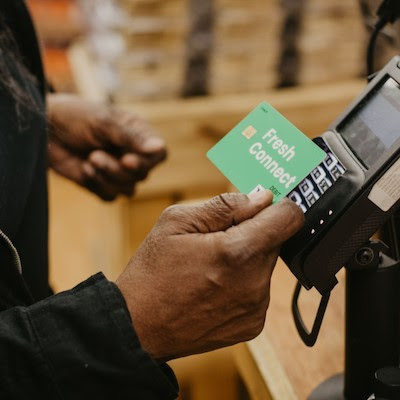
Recently Stop & Shop announced plans to go chainwide with a program that offers food insecure consumers prepaid debit cards “prescribed” by health care providers to buy fresh produce. According to Steven Johnson, Grocerant Guru® at Tacoma, WA based Foodservice Solutions® that is a good step forward in helping ‘food insecure’ consumers and will go a long way to gain favor with them.”

Stop & Shop said the Fresh Connect program from nonprofit About Fresh is now accepted at more than 100 Stop & Shop stores in eastern Massachusetts. Plans call for the Fresh Connect — piloted initially at Stop & Shop’s Grove Hall store in Dorchester, Mass. — to roll out to the supermarket chain’s 400-plus stores in Massachusetts, Connecticut, Rhode Island, New York and New Jersey by early spring.

Stop & Shop noted that, with the expansion of Fresh Connect, it becomes the first major retailer to make the produce-as-a-prescription program available. If  you are a convenience store or restaurant we ask how are you extending the ‘halo’ of better-4-you to those 44 million consumers that buy food in every retail channel of foodservice?

In case you did not know; Fresh Connect’s prepaid debit cards, funded by health care organizations, are sent to food insecure customers after they're enrolled by a health professional.


Stop & Shop President Gordon Reid, stated, “Increasing access to fresh and healthy foods for those facing food insecurity remains a top priority for us when it comes to caring for our communities,”… “With food insecurity continuing to impact the neighborhoods that Stop & Shop serves at an overwhelming rate, we’re proud to come together with About Fresh to ensure that even more people can access fresh, high-quality foods that support their well-being.”

So, Fresh Connect’s prepaid debit cards are funded by health care organizations, primarily major institutions such as Brigham Medicaid ACO, Brigham Women’s Faulkner Hospital and Boston Medical Center. Health providers sign up — or “prescribe” — food insecure patients according to baseline health indicators, and monthly card disbursement amounts are set via the HIPAA-compliant platform’s enrollment form. Participants receive their cards in the mail and can use them to buy fresh fruit and vegetables at grocery stores, restaurants and other food retailers, including online. At checkout, the cost of the eligible items is deducted from the total purchase amount. Once again technology is at work, are you thinking a customer ahead?

Here is a little more background, before partnering with Stop & Shop, Fresh Connect cardholders were able to use their cards only at About Fresh’s “Fresh Trucks” offering fresh produce at sites around Boston and at local retailers. The Boston-based nonprofit said that making Fresh Connect cards available through Stop & Shop gives participating consumers wider access to fruit and vegetables, since many already are shopping at the chain’s stores.

In Massachusetts alone, as many as one in seven adults and one in five children are grappling with food insecurity, numbers elevated amid economic pressures brought on by the COVID-19 pandemic, according to data from the Greater Boston Food Bank cited by Stop & Shop and About Fresh.


Josh Trautwein, co-founder and CEO of About Fresh, stated, “Especially in the midst of the global pandemic, working with Stop & Shop to ensure communities have access to fresh fruits and vegetables is more important than ever,” commented. “By combining Stop & Shop’s reach across the Northeast with Fresh Connect’s innovative prescription produce program, thousands of people are gaining access to affordable, healthy food that they love.”

In 2022 it is estimated that 39 million Americans that are using the U.S. Supplemental Nutrition Assistance Program (SNAP) funded at 85.10 billion U.S. dollars.  That is a lot of people, a lot of money and a lot of government support for one sector of retail foodservice.  Share your ideations on how the government could help you help 39 million consumers?

Are you looking for a new partnership to drive sales? Are you ready for some fresh ideations? Do your food marketing tactics look more like yesterday that tomorrow?  Visit GrocerantGuru.com for more information or contact: Steve@FoodserviceSolutions.us Remember success does leave clues and we just may have the clue you need to propel your continued success.


Thursday, February 3, 2022

McDonald’s Marketing is Interactive Participatory Success Clue


How do you like your McDonald’s meal?  Do you like to customize and or personalize your meal? Customization and personalization are teams’ industry insiders use, food marketers use, and college professors use while talking about customer engagement and customer loyalty.

Last week McDonald's new ad campaign features customer social-media menu hacks, such as PJ Mattingly's "Surf + Turf."  In yet another success clue, McDonald’s edifies its relationship with consumers leveraging interactive and participatory marketing tactics strategically via social-media.

Once again, we turn to Steven Johnson, Grocerant Guru® at Tacoma, WA based Foodservice Solutions® to see what he thinks of the new ad campaign. Johnson stated, “continuing it traditional of celebrity endorsements’ McDonald’s extends it brand messaging with a specific target market in mind.”

Gen Z and millennials are ‘digital natives’ and are very comfortable with the term ‘hacks’ and the use of social-media. These new ad’s spotlight 4 TikTok fans’ creative combos elevating its brand invitation once again to a consumer base that is driving change in society with is digital skill-set according to Johnson.

McDonald’s is spotlight four fans’ favorite hacks, popularized on social media, as limited-time offers. The four items can be ordered at participating U.S. restaurants through the brand’s smartphone app.


The four initial TikTok-user inspired mashups include:

Hash Brown McMuffin:  This combines a Sausage McMuffin with Egg with the crunch of a hash brown. Available only during breakfast hours.  “I’ve been saying for years that the hash brown goes inside of the Sausage McMuffin with Egg … that extra little crispy bite is the real breakfast cheat code,” said creator Sarah Sandlin (@sarahmargaretsandlin on TikTok).

Crunchy Double: This hack features Chicken McNuggets on a Double Cheeseburger with barbecue sauce. “It’s simple, yet so tasty...Chicken McNuggets topped with a Double Cheeseburger, then drizzled with Tangy Barbeque Sauce. Order it now and thank me later,” said Greg Simms (@grubwithgreg on TikTok).

Land, Air & Sea: This combines a McChicken sandwich with a Big Mac and a Filet-O-Fish. “It’s the flavor I never knew I needed, until I needed it. Go big baby!” - Julian Broadway (@julianbroadway on TikTok).

Surf + Turf: This mashup features a Filet-O-Fish and a Double Cheeseburger. “Sometimes I’m craving the flaky crunch of a Filet-O-Fish, sometimes I want the juiciness of a Double Cheeseburger, and sometimes I want both. So why choose?” asked PJ Mattingly (@heavyhands94 on TikTok). It is available via the app and McDelivery.

The customer-hack promotion will be supported by television commercials, a company spokesperson said.


Jennifer Healan, vice president for U.S. marketing, brand content and engagement at McDonald's USA, stated, “From hip-hop icons to Christmas queens, everyone has a unique go-to McDonald's order, including our everyday customers. This campaign shows that it has never been ‘our menu’ — the menu belongs to our fans,”.

Healan continued,  “We're excited to celebrate them in a bigger way than ever before by putting their delicious hacks – as seen in social media – on our menus. I personally can’t wait for our fans to try my favorite hack, the Hash Brown McMuffin,” … “IYKYK,” which is the TikTok hashtag for “If You Know You Know.”

If you want to see some of ideations that McDonald’s customers to wanted to share of their favorite combinations on social media, look up the tag; @McDonalds with the hashtag #McDonaldsHacks.

Success does leave clues. One clue that time and time again continues to resurface is “the consumer is dynamic not static”.  Regular readers of this blog know that is the common refrain of Steven Johnson, Grocerant Guru® at Tacoma, WA based Foodservice Solutions®.  Our Grocerant Guru® can help your company edify your brand with relevance.  Call 253-759-7869 for more information. 


Wednesday, February 2, 2022

Wakefern’s New Partnership Saves Consumers Time with Delight


Grocery stores consume to much of your time in the minds eye of the consumer.  The vast majority of consumer buy only 100 items form their local grocery store a year.  They simply buy them time and time again.  Walking through the store by passing 30,000+ other items is a ‘waste’ of time in their minds-eye.

Grocery retail have known this for the past 30+ years but are so tethered to an outdated Wall Street analyst metric, they simply do not care.  They you to spend all the time in the world in their store so you ‘increase the size’ of your grocery basket.

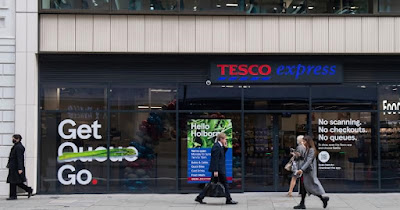
Steven Johnson, grocerant Guru® at Tacoma, WA based Foodservice Solutions®, stated during a presentation that “Wakefern Food Corp., the largest retailer-owned cooperative in the U.S., is taking all of the right steps to improve its relationship with consumers by partnering with Trigo.  The partnership with Trigo will not only reduce operating cost by reducing labor, it will reduce theme it takes a consumer to get in and out of their stores.  Thus, adding reducing a consumer ‘pain-point’ while edifying relevance with technology.

In case you did not know, Trigo, is an Israel-based computer vision and frictionless checkout technology provider, to pilot an autonomous supermarket making use of Trigo’s AI-based frictionless checkout technology.


Wakefern, the logistics, distribution and merchandising arm for ShopRite stores, is comprised of nearly 50 member companies that independently own and operate close to 360 retail supermarkets under the ShopRite, Price Rite Marketplace, The Fresh Grocer, Dearborn Market, Gourmet Garage and Fairway Market banners.

Charlie McWeeney, Wakefern’s VP of technology, innovation and strategy, stated, “With Trigo’s frictionless technology, Wakefern Food Corp. is opening up access to cutting-edge innovation for our members,” said, in a statement. “We are excited to pilot Trigo’s solution and offer our consumers the ultimate in checkout convenience.”

Starting off slow, with a trial pilot program, at an as-yet-to-be named Wakefern banner in New Jersey, represents Trigo’s U.S. debut.  Regular readers of this blog know of Trigo, as the company that launched its frictionless checkout technology with some of Europe’s leading grocers, including the U.K.’s Tesco as well as Germany’s Rewe, Aldi Nord and Netto, owned by The EDEKA Group.

“Trigo transforms existing supermarkets and grocers into fully autonomous, digital stores, combining their technology with Trigo computer vision to create a seamless shopping experience,” the company said. Applying Trigo’s GDPR compliant technology to various locations will allow retailers to scale their business while maintaining their unique character and layout, it adds.

At grocery stores featuring the Trigo technology, shoppers use an app to scan a QR code as they enter, and then are free to pick up items and leave without having to check out, in much the same way Amazon’s Just Walk Out technology functions in Amazon Fresh and Amazon Go locations.

Trigo co-founder and CEO Michael Gabay, stated, “Trigo is proud to work with some of the largest grocery retailers around the world, so partnering with Wakefern Food Corp., was a natural step for the company,” … “By helping Wakefern convert some store formats, or develop new ones that are exclusive to their brands, we can help them accelerate their growth within the market and pave the way for frictionless shopping in the future.”


Here is how it works; using AI and algorithmics experts, Trigo’s advanced retail automation platform identifies customers’ shopping items to create a seamless checkout process. Trigo works closely with retailers to convert their existing stores while maintaining their unique character and layout and leveraging their physical grocery scale to roll out next-generation offerings securely, says the company.

Powered by its proprietary 3D engine, Trigo offers grocery retailers a range of additional solutions called StoreOS, including predictive inventory management, pricing optimization, security and fraud prevention, planogram compliance, and event-driven marketing.

Are you ready for some fresh ideations? Do your food marketing ideas look more like yesterday than tomorrow? Interested in learning how our Grocerant Guru® can edify your retail food brand while creating a platform for consumer convenient meal participation, differentiation and individualization?  Email us at: Steve@FoodserviceSolutions.us or visit: us on our social media sites by clicking one of the following links: Facebook,  LinkedIn, or Twitter


Tuesday, February 1, 2022

Fazoli’s Better-4-You Price, Service, Value Halo Works


The ability for a chain restaurant to use data to better understand it customer is a competitive advantage.  Chain restaurant have access to data specific targeting their target customer than one would think.  Food suppliers, Credit Card companies, Banks, Meat supplies, Consultants, and Private Label Manufactures not to mention the troves of data they collect on every transaction. 

Steven Johnson, Grocerant Guru® at Tacoma, WA based Foodservice Solutions® believes that Fazoli's new promotion '5 Under $5 Under 500 Calories' Menu will be a big hit driving top-line sales and bottom-line profits. Johnson stated, “consumers are paying attention to the price of food, and every January and February they pay attention to Calories. This new targeted offer will resonate enough to drive trial and customer migration from the fast casual sector, fast food sector, and grocery stores.”


This new offer with reset the current price, value, service equilibrium within the retail food sector according to Johnson. Fazoli’s known for serving premium Italian dishes at a great value – is making it more convenient than ever for fans to maintain their new year’s goals without sacrificing flavor with the launch of its 5 Under $5 Under 500 Calories Menu! 

Available at participating locations now through March, guests can choose from five delectable dishes at an unmatched value that are all under 500 calories: 

·         Gluten-friendly Rotini with Marinara (380 calories) – Gluten-friendly rotini topped with the brand’s signature marinara made from vine-ripened tomatoes. 

·         Keto Pepperoni & Bacon Flatbread (490 calories) – A low-carb flatbread brushed with garlic butter and topped with Mozzarella, pepperoni and savory bacon.

·         5-Piece Buffalo Boneless Wings (420 calories) – Five crispy boneless chicken wings tossed with tangy buffalo sauce. Wing orders include a side of celery and choice of ranch or bleu cheese. 

·         Small Spaghetti with Meat Sauce (370 calories) – Spaghetti topped with meat sauce made with ground beef, vine-ripened tomatoes and Italian seasonings.

·         Small Fettuccine Alfredo (450 calories) – Fettuccine with creamy garlic and Parmesan Alfredo sauce topped with shaved Parmesan cheese and Italian herbs.


Fazoli’s Director of Culinary Innovation Rick Petralia, stated, “At Fazoli’s, we’re taking the stress out of new year’s resolutions while giving our fans exactly what they crave,”…. “Our 5 Under $5 Under 500 Calories Menu allows our guests to experience classic Italian dishes at an incredible value, all while feeling confident that they’re sticking to their health goals. We’re constantly innovating our menu to best accommodate our guests’ dietary and lifestyle preferences to ensure we offer delicious options for every guest. Our new menu provides a quick, easy and delicious way to commit to better eating habits while still enjoying flavor-packed dishes.”

Leveraging the ‘halo’ of better-4-you with price will prove to be an outstanding branded message that will drive incremental revenue, trial, and garner new long-term customers.

Don’t over reach. Are you ready for some fresh ideations? Do your food marketing ideations look more like yesterday than tomorrow? Interested in learning how Foodservice Solutions® can edify your retail food brand while creating a platform for consumer convenient meal participation, differentiation and individualization?  Email us at: Steve@FoodserviceSolutions.us or visit us on our social media sites by clicking the following links: Facebook,  LinkedIn, or Twitter

In a Battle for Share of Stomach

You Can Win!